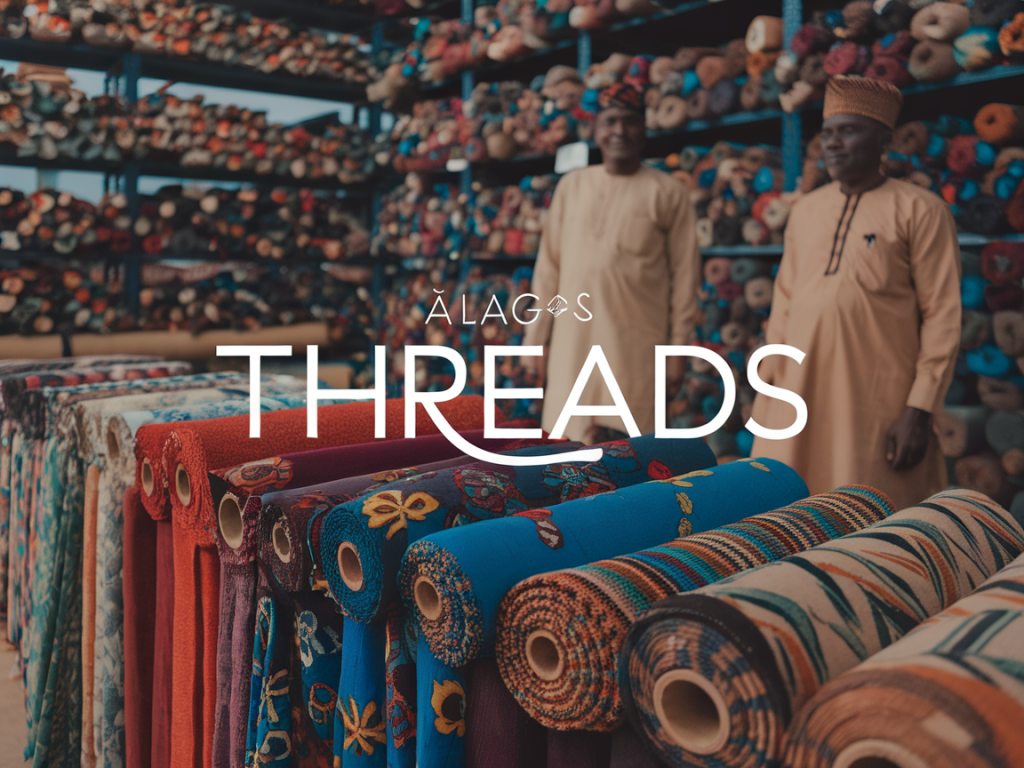
I have been thinking a lot about archives that are alive — not museums under glass but accumulations of practice, ritual and pattern that continue to breathe through people’s hands. A textile archive in Lagos, curated by a cooperative, is precisely this: threads that are repositories of prayers, genealogies and modes of making. When you name such an archive Àṣẹ Threads you are invoking a Yoruba cosmology where àṣẹ is agency, permission and the power to make things happen. The question then becomes urgent: can a cooperative brand this archive in ways that help it thrive—financially and culturally—while ensuring ritual authorship remains with the people and lineages who produced it?
Why the name matters
Names are not neutral. Calling a project Àṣẹ Threads does more than supply a catchy label; it situates the archive within a worldview. That can be generative: it immediately signals respect for a concept central to Yoruba living traditions, it can attract attention to the archive’s ethical framing, and it can help the cooperative differentiate itself in global markets. But it also raises risks. Is the cooperative authorised to mobilise àṣẹ in this context? Does the branding give the impression that ritual knowledge has been commodified or opened to anyone?
From the outset I think about the balance between visibility and protection. You want the archive to be legible to funders, museums and customers. You also want to make sure that the people who hold the ritual authorship—the tailors, ritual specialists, lineage heads, and their families—retain control over how their spiritual and technical knowledge is used.
What “ritual authorship” means here
Ritual authorship is messy and layered. It can refer to a named tailor who designed a cloth used for a specific rite, a priest who consecrated patterns, or a lineage who decides that a motif is taboo outside certain contexts. In many West African settings authorship is communal and performative: the maker’s hands are important, but so are the rituals that imbue a textile with meaning. Protecting ritual authorship therefore requires protecting both the maker’s attribution and the cultural protocols that govern usage.
Legal tools — what helps and what doesn’t
Legal frameworks can offer parts of the toolkit, but they rarely map perfectly onto living traditions.
- Copyright and moral rights: Under the Nigerian Copyright Act, individual creators can claim authorship of original works. Moral rights (the right to be identified as author and to object to derogatory treatment) may help tailors, but they assume an identifiable author rather than a community or ritual. Copyright also has time limits, which is awkward for traditions meant to persist indefinitely.
- Trademarks and certification marks: A cooperative can register Àṣẹ Threads as a trademark for goods and services. A better fit might be a certification mark that guarantees certain cultural protocols—akin to a “seal of authenticity” used for Geographical Indications. This allows the cooperative to police misuse of the brand while signalling to consumers that products respect ritual authorship.
- Collective trademarks and cooperatives law: Structuring as a cooperative association with internal bylaws gives an enforceable governance model. Membership rules can specify consent processes, attribution norms, and benefit-sharing. Those bylaws can be explicit about what “ritual authorship” entails and how decisions are made about use.
- Geographical indications (GI): For textiles tied to a specific place and practice (e.g., Aso Oke for the Yoruba), a GI can protect reputation and control use. Nigeria currently has limited GI frameworks compared to some countries, but it’s a model worth exploring with legal counsel.
- Customary law and community protocols: In many contexts customary or traditional decision-making structures are the most respected means of attribution and permission. Codifying customary protocols into written community protocols, then aligning those protocols with legal instruments, can create hybrid protection.
Practical governance — how a cooperative could proceed
If I were advising a Lagos cooperative considering the Àṣẹ Threads brand, I’d suggest a multi-layered approach that blends legal mechanisms with ethical practice.
- Develop a charter of ritual authorship: Work with artisans, priests/priestsesses, elders and youth to define what authorship and permission mean for specific textiles. Who must be consulted before a design is publicly displayed or sold? Which motifs are public and which are restricted?
- Membership and consent procedures: Make consent explicit. New items added to the archive should come with documented consent forms stating how a textile can be used, attributed and commercialised. Consent should be renewable and revocable where appropriate.
- Attribution standards: Implement clear labelling: maker’s name, community, ritual function, and any usage restrictions. Labels can carry short QR codes linking to oral histories or explanatory texts, with different access levels for sensitive material.
- Benefit-sharing mechanisms: Decide how revenues from reproductions, exhibitions or licensing are distributed. Consider a collective fund for community projects, apprenticeships or ceremonies—money that keeps practices alive rather than merely monetising them.
- Access controls for sensitive items: Not everything belongs in a public-facing archive. Use tiered access: public catalogue entries for general pieces, and restricted entries needing community gatekeeper approval for ritual textiles.
- Training and capacity building: Invest in legal literacy for members and in digital archiving skills so the cooperative controls its own narrative and metadata.
Brand protection without appropriation
Registering Àṣẹ Threads as a brand is possible and can be ethical if done with care. I would recommend:
- Co-ownership: Ensure the trademark is owned by the cooperative as a collective entity—not a single director. That prevents individual appropriation.
- Protocol-driven licensing: Any third-party use of the brand should be licensed under terms that require adherence to the cooperative’s authorship charter and benefit-sharing rules.
- Transparent storytelling: Use the brand to educate. Website copy, labels and exhibitions should foreground ritual authorship in an accessible way, explaining why certain pieces aren’t for sale or why reproductions differ from ritual originals.
- Enforcement strategy: Be prepared to police misuse. Misappropriation—selling “Àṣẹ Threads” products that violate protocols—will damage the brand faster than the absence of trademark protection.
Digital archives and the ethics of access
Digitising the archive is tempting for outreach and revenue, but it changes the work. Photographs and pattern files can be copied, remixed and separated from ritual context. I favour a model where digital records exist at multiple levels:
- Public catalogue: Low-resolution images, descriptive metadata, and stories about the textiles that are safe to share.
- Restricted collection: High-resolution images and detailed ritual information accessible only with community authorisation.
- Community-controlled portals: Platforms where members govern who sees what and where oral histories are stored in local languages as well as English.
Precedents and allies
We can learn from other initiatives. Geographical Indications for Scotch Whisky or Darjeeling tea show collective reputation can be protected. The Centre for the Study of the Public Domain, WIPO’s work on traditional knowledge, and UNESCO’s Intangible Cultural Heritage lists all provide frameworks and arguments that can be adapted. Closer to home, initiatives around West African textiles—like adire co-ops in Nigeria or the Akwete weaving communities in southeastern Nigeria—offer practical lessons about cooperative governance, tourism, and market pressures.
Risks that require attention
Branding and legal protection are not panaceas. Problems to watch for:
- Elite capture: when cooperative leadership uses the brand for personal gain without redistributing benefits.
- Commodification of sacred objects: reducing ritual textiles to decorative goods erodes their meaning.
- External dilution: large fashion houses co-opting motifs without consent, even if the cooperative has a trademark; enforcement may be costly.
- Intergenerational tensions: younger members may want broader exposure while elders may prioritise secrecy.
At its best, naming the archive Àṣẹ Threads could be a declaration of care—a promise to treat textiles as living cultural actors rather than inventory. That promise must be backed by robust governance, legal protection adapted to communal practices, and a humility that recognises certain forms of knowledge are not for sale. If those pieces fall into place, a Lagos cooperative can not only brand its archive and thrive, but also model a different way for cultural heritage projects to centre ritual authorship rather than erase it.