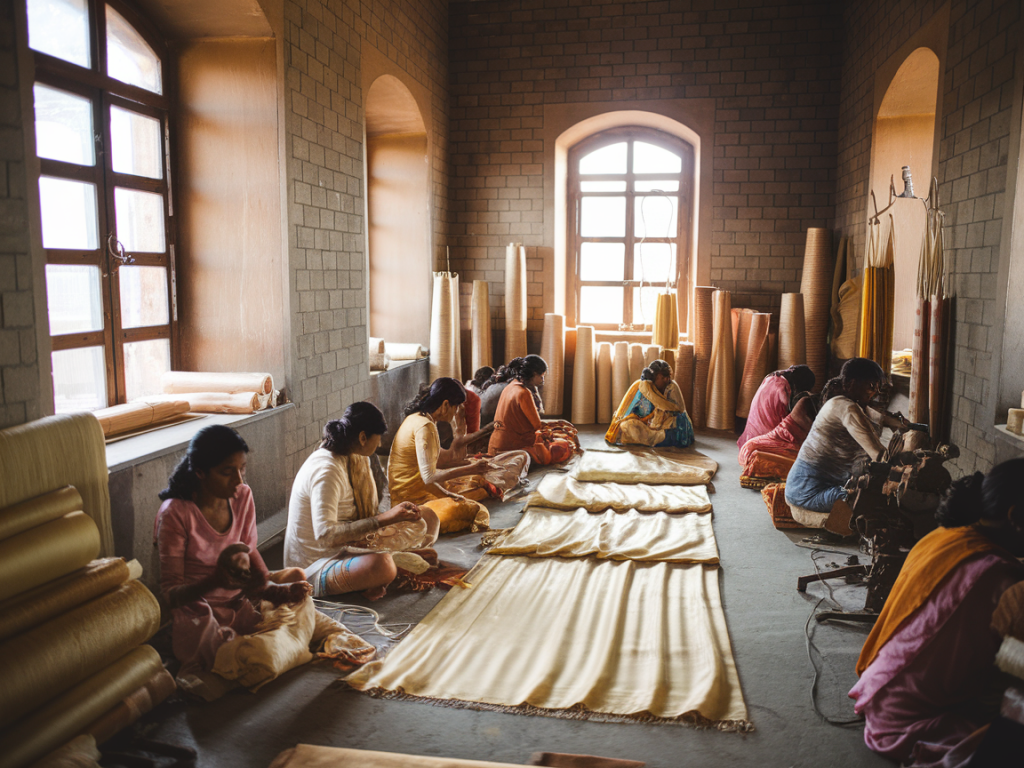
When I first stepped into a tiny silk workshop in Varanasi, the air was thick with the smell of hot metal and boiled dye, and a single electric fan stirred a tired rhythm against rows of handlooms. The place was no more than a courtyard and three small rooms, but it held something far larger than its footprint: patterns and techniques that had migrated through generations, motifs annotated in the margins of old sarees, and a quiet confidence that these textiles were not just products but living archives. Little did I know then how complicated the simple act of negotiating with an international fashion brand could become.
The problem people are asking about
When readers ask "How does a tiny silk workshop in Varanasi negotiate intellectual property with international fashion brands?", they usually mean several overlapping questions:
These are not academic curiosities. They go straight to livelihoods, cultural survival and the ethics of global commerce.
What traditional IP looks like in the workshop
In Varanasi, "design" often isn't a single person's intellectual creation the way copyright imagines it in the West. Patterns are communal: a paisley motif might be traced back to an ancestor; the exact weave of a Banarasi brocade is a craft shared across families. That raises immediate challenges. Who owns a motif that the whole neighbourhood recognises as part of its patrimony?
When a brand approaches a workshop, it might be looking to replicate a weave, borrow a motif, or commission a custom design. Each is a different conversation:
Why formal IP tools don't always fit
Formal IP—copyright, design registration and patents—was not designed for living, community-owned practices. You can register a new textile design in many jurisdictions, but you cannot easily register a pattern that's been woven into the social life of a place for centuries. That said, there are mechanisms that can help:
How negotiations typically happen—my observations
Negotiation rarely starts in a lawyer's office. It usually begins with an intermediary: a middleman, a trader, a vendor on a business trip abroad, or a design house with ties to the West. I watched a negotiation that went like this:
In many cases, the big brand’s bargaining power leads to contracts that effectively assign all commercial rights to the buyer. The workshop gets the immediate payment and the order volume, but it loses control over future use and adaptation of its patterns.
Practical strategies that worked for some workshops
Over the years I've met craftspeople and NGOs who developed pragmatic ways to reclaim some of that power. They don't all involve lawyers—often because lawyers are expensive—but they are effective.
Things that still go wrong
Even with these strategies, power imbalances persist. Fast fashion's demand for rapid, cheap copies incentivises appropriation. A well-resourced brand can buy a one-off bulk order, then adapt the pattern and mass-produce elsewhere. When disagreements arise, the workshop often lacks the documentation or legal standing to bring a claim.
Another persistent issue is capacity: many workshops can't handle the paperwork or the quality-control demands of global supply chains. Brands sometimes require exclusive supply, which limits a workshop's ability to sell elsewhere. Or they demand design exclusivity without offering commensurate compensation.
Where supportive interventions make a difference
I’ve seen NGOs, cultural institutions and ethical brands step in to change the dynamic. Interventions that work include:
| Intervention | Benefit |
|---|---|
| Collective trademarks | Protects authenticity; signals provenance to consumers |
| Design archives | Creates proof of origin and prior art |
| Negotiation training | Improves contract outcomes; reduces exploitative clauses |
Small wins, big implications
I remember a small cooperative in Varanasi that refused a lucrative order from an international fast-fashion buyer because the contract demanded exclusive rights over a traditional weave for five years. They opted to work with a smaller ethical brand that agreed to limited-use licensing plus a profit share and ongoing training for apprentices. The order was smaller, but it preserved the cooperative’s ability to sell to other buyers and to keep teaching the weave to the next generation.
That trade-off—between immediate cash and long-term cultural and economic sovereignty—sits at the heart of many decisions I witnessed. Negotiating IP in Varanasi is less about law in the abstract and more about agency: who gets to decide how a pattern travels, how it is named, and who benefits when it does.
Questions you might still have
If you want to know what to look for when buying artisanal textiles, here are three quick pointers I learned:
Negotiations between tiny silk workshops and international brands are never just transactional. They are negotiations about memory, identity and the routes by which culture becomes commodity. The legal frameworks are catching up, but the decisive factor remains human: whether buyers respect the makers enough to share not only orders, but also power.