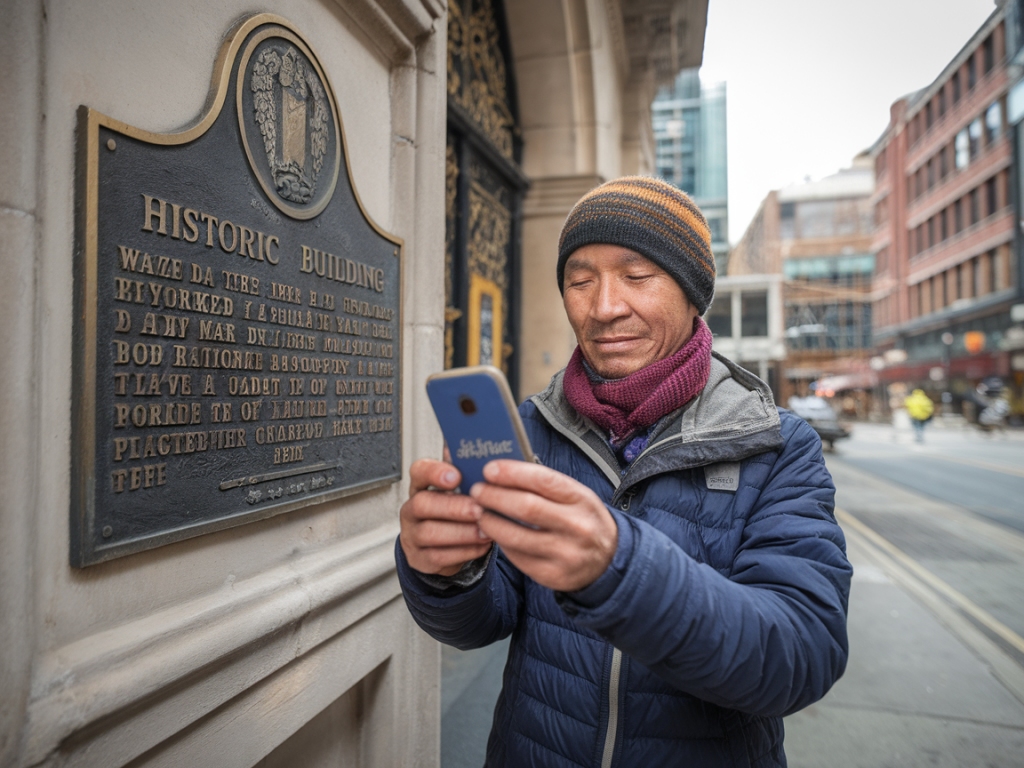
I started thinking seriously about the idea of smartphone audio mapping by migrant street vendors when I overheard a vendor in Marseille describing not only the spices he sold but the names of the neighbourhoods his parents came from, the songs they hummed while cooking, and the routes they’d taken to arrive in France. He spoke in a mixture of Arabic, Wolof and French, and I realised his voice — and the acoustic textures of his trade — were a kind of living archive that municipal heritage lists rarely acknowledge.
What do people mean by "audio mapping" and why smartphone recordings?
When I say audio mapping I mean geo‑referenced sound recordings — voices, ambient noise, vendor calls, music tied to specific places — assembled into an interactive map. Smartphones make this possible because they combine decent microphones, GPS and easy upload to platforms like Mapbox, ArcGIS Online or community tools like Ushahidi and OpenStreetMap (with plugins). Apps such as Voice Memos (iOS), Easy Voice Recorder (Android), and field apps like the open‑source Field Recorder or Audacity on desktops allow quick capture. There are also sound‑specific platforms like SoundCloud or projects like Sounds of the City / Soundmaps which focus on place‑based audio.
Why migrant street vendors?
Migrant street vendors are often overlooked carriers of cultural memory. Their calls, barter rituals, recipes recited to customers, and music choices are all portable archives. Unlike museums or listed monuments, these sounds are ephemeral — they fade with changes in policy, gentrification or policing. Recording them with a smartphone is a low‑cost, practical method for capturing intangible heritage in context, and because many vendors already use phones for mobile payments, communications and social media, the tech is familiar.
Can these recordings influence municipal heritage listings?
Yes — but not automatically. Municipal heritage listings traditionally prioritise built form, architecture and designated monuments. Intangible elements are increasingly recognised (think UNESCO’s Representative List of the Intangible Cultural Heritage of Humanity), yet local bureaucracies lag. Audio maps created by or with vendors can reshape listings in several ways:
- Evidence of living practice: Recordings demonstrate ongoing cultural practice in specific locations — a strong argument when heritage committees require proof of continuity.
- Place‑based narratives: Sound maps make clear that a street, a square or a market is not only physically significant but acoustically and socially meaningful.
- Community authorship: When vendors lead or co‑curate mapping projects, they shift who controls the narrative that heritage bodies evaluate.
- Policy pressure: Publicly accessible audio maps can galvanise activists, journalists and councillors to lobby for recognition or protective measures.
What are the practical and ethical challenges?
I’ve worked on cultural projects where a well‑meaning archive caused harm because consent and context were ignored. Recording people on the street is fraught with ethical considerations:
- Informed consent: Vendors need to understand how recordings will be used. A quick "do you mind?" is not enough if material may be published, monetised or used for legal ends.
- Data security: GPS tags can expose vulnerable people to surveillance. Storing audio securely and anonymising sensitive metadata is essential.
- Language and translation: Nuance and cultural meaning are lost if recordings are transcribed or translated without community oversight.
- Power imbalances: Who benefits? If mapping increases tourism or property values, vendors may be displaced rather than supported.
How have such projects worked in practice?
There are precedents. Projects like Soundcities and the Barcelona Soundscape used community audio to argue for urban conservation. In Chennai, independent researchers mapped street hawker calls as living heritage, combining oral histories with recordings to influence municipal dialogues. What made these projects persuasive was the layering of evidence: audio plus interviews, historical documents, and visual mapping. This is not just an aesthetic archive — it becomes a multimodal dossier.
What tools and workflows make audio maps credible for heritage bodies?
Heritage committees expect verifiable, archivable materials. I’ve seen the following workflow work well:
- Use standardized recording settings (e.g. WAV, 44.1/48kHz) where possible.
- Attach clear metadata: who recorded, when, where (with anonymisation options), and consent statements.
- Complement audio with short video, photos and a written statement from the vendor about meaning and history.
- Host materials in trusted repositories: local archives, community radio stations, or institutional platforms (university servers, local museums) that can provide permanence.
- Produce a summaries dossier for municipal officers linking sounds to policy recommendations (recognition, market protections, cultural routes).
People often ask: Will this make vendors targets for enforcement?
That is a real and legitimate fear. But it’s a risk that can be mitigated. Projects must be governed by clear community protocols: anonymise GPS points when necessary, allow vendors to decide if recordings are public or for archive only, and work with NGOs or legal clinics to safeguard participants. In some contexts — where vendors are criminalised — archivists have used polygon mapping, removing precise coordinates, or delayed public release until protections are in place.
Who should lead these initiatives?
My experience tells me the most defensible projects are vendor‑led or co‑designed. That can look like training vendor collectives to record and upload their own material, or establishing a partnership where local cultural organisations provide technical and legal support while vendors set priorities. Funders and municipal officials can be allies, but leadership needs to stay with the community for the work to remain ethical and meaningful.
What could municipalities do differently if they took audio maps seriously?
Imagine a heritage register that includes “soundscapes” alongside statutes and facades: market calls listed as intangible heritage, protected performing itineraries, acoustic corridors preserved from intrusive construction, or licensing models that privilege long‑standing vendors. Municipalities could also fund oral‑audio archives, offer micro‑grants to vendors for cultural events, and consult audio maps when planning streetscape changes.
| Potential Benefit | Practical Hurdle |
|---|---|
| Recognises non‑monumental heritage | Requires new evaluation criteria |
| Strengthens community claims | Needs robust consent and data protection |
| Expands tourism/cultural offer | Risks commodification and displacement |
How might this change the way we imagine cities?
For me, the most exciting outcome is less about formal listings and more about relational change: listening differently. Audio maps force us to treat sound as evidence and memory, to realise that heritage is not only stone and ceremony but the cadence of sales pitches, the recipe shared over a cart, the lullaby hummed at dusk. If municipal bodies can learn to value that evidence, they can craft policies that protect people, not just places.
There are no simple answers — but there are clear starting points: centre consent, build vendor capacity, secure archives, and push municipalities to expand their definition of heritage. I keep returning to the same image: a vendor pressing a smartphone to their ear, not to call a customer, but to record a song their grandmother taught them — and knowing that for once, that voice might be heard in the corridors where decisions are made.