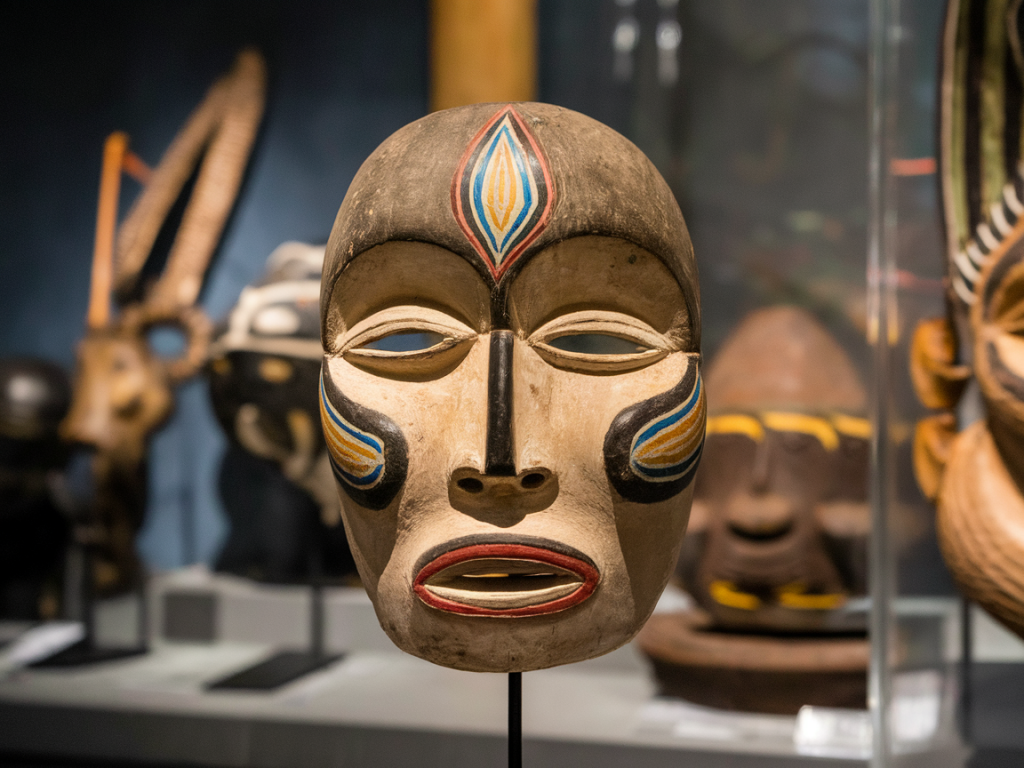
I remember the first time I stood in front of a ritual mask that had been returned to its community after decades in a European museum. The moment was thick with relief, gratitude and a fragility I hadn’t expected. That object—a carved face, painted, scarred by ritual use—carried more than artistry; it carried obligations, memories and a responsibility toward a living community. When communities ask how a returned mask might also support schools, healthcare or cultural programmes, the question is not just financial. It is about preserving the integrity of ceremonial life while exploring sustainable ways to make cultural heritage fuel social goods.
The tensions at play
Repatriation narratives are often framed as moral righting of historical wrongs. They are also logistical and economic puzzles. I’ve seen conversations collapse into two extremes: keep the mask hidden in a shrine forever, or turn it into a packaged spectacle for tourists. Both responses are inadequate. One risks depriving younger generations of educational, livelihood and infrastructural benefits; the other risks commodifying sacred practice and hollowing out meaning.
So how do we balance the sacred and the pragmatic? How can a returned ritual mask fund community schools without turning ceremonies into tourist spectacles? Three elements matter: community governance, creative revenue models, and clear cultural protocols. Below I map practical steps and real-world considerations informed by fieldwork, conversations with curators and community leaders, and the slow work of cultural mediation.
1. Start with community-led governance
Any plan that links heritage objects to community development must be rooted in local decision-making. That means the community—not a foreign museum, not a tourism board—sets the rules. In practice this often looks like forming a cultural trust or stewardship council that includes elders, youth representatives, teachers and, where appropriate, diaspora members. The trust should have legal recognition if possible, and transparent accounting systems.
- Define purpose: Is the income intended for school fees, teacher salaries, infrastructure, or cultural education? Be specific.
- Decide who benefits: Ensure mechanisms for inclusive distribution so benefits reach girls, marginalized families and remote learners.
- Set cultural guardianship rules: The same body that manages funds should also set protocols for when and how the mask appears in public.
When governance is local and transparent, it becomes harder for external actors to pressure communities into exploitative arrangements. It also builds trust among donors and ethical partners who prefer to funnel funds into accountable structures.
2. Separate sacred ceremonies from commercial display
I have lost count of the projects that failed because organizers blurred the line between ritual and performance. Sacred ceremonies are not products; their power comes from secrecy, lineage and context. To protect that, communities should formalise a two-track approach:
- Closed ceremonial use: Maintain rituals for initiated members and cultural continuity. These remain non-commercial, and access is restricted based on local customs.
- Public cultural education: Create curated, non-ritual experiences that explain the mask’s history, symbolism and restoration process without enacting the sacred rites.
In practice this might mean a small, community-managed interpretive centre where replicas, high-quality photographs, videos, and oral histories provide context. Replicas are crucial here: a faithful copy can be used for demonstrations or controlled performances, while the original stays protected for ceremonial life.
3. Design ethical revenue streams
Money can be raised for schools in ways that respect cultural integrity. Here are models that have worked in communities I’ve visited or studied:
- Replicas and handicrafts: Commission local artisans to produce replicas, textiles or printed materials that tell the mask’s story. Sell sustainably through online platforms (Etsy, Shopify) and ethical retailers. Use clear labelling—“Community-made replica; proceeds support X school.”
- Community-run museum/shop: A modest on-site shop—managed by the cultural trust—can sell publications, crafts and learning kits. Profits go directly into an education fund.
- Pay-to-learn programmes: Small, respectful workshops (language, craft, story sessions) designed for researchers, students and culturally curious visitors. These are not performances; they are learning opportunities run by community educators.
- Grants and ethical partnerships: Use the repatriation moment to attract targeted funding from foundations, UNESCO programmes or cultural NGOs interested in heritage-led development.
- Digital content and licensing: Produce documentaries, oral history archives or educational modules that can be licensed to universities and cultural platforms. Digital revenue often scales without compromising sacred practices.
Transparency is essential: publish annual reports, show where money goes, and involve community auditors. Donors appreciate clarity; communities deserve accountability.
4. Protect cultural protocols with enforceable agreements
Contracts matter. When I mediated a repatriation-related partnership in West Africa, the community insisted on a “cultural use agreement” with a European museum and a UK-based distributor. It specified that:
- Ritual access remained exclusive to authorised community members.
- Replicas could be produced only with community approval and a fair royalty rate.
- Public displays would use explanatory, non-sacred formats.
- Revenue allocation to a named education fund was mandatory, with third-party audits.
Legal enforceability reduced the risk of creeping commodification and gave the community leverage to protect intangible aspects of their heritage.
5. Invest in education projects that reinforce cultural continuity
Money shouldn’t just pay salaries or buy bricks; it should fund programmes that strengthen cultural transmission. Consider:
- Local language classes taught by elders.
- Apprenticeships in carving, textiles and ritual arts.
- Oral history projects that involve students in interviewing elders and archiving stories.
- Scholarships for young people to study heritage management or museum studies—locally or abroad—on the condition they return to serve the community.
These investments create a virtuous loop: heritage educates, and education sustains heritage.
6. Frame tourism ethically and selectively
Not all tourism is exploitative. But it must be small-scale, consent-driven and culturally literate. Practical safeguards include:
- Limiting visitor numbers and times around key rituals.
- Mandatory briefings for visitors on conduct, photography and payment that goes to community funds.
- Hiring local guides and interpreters—especially youth—so economic benefits are widely distributed.
- Refusing commercial filming unless the community approves the script and receives a fair fee.
I’ve seen small, well-run community tourism programmes create reliable income without derailing ritual life. The key is that the community controls the narrative and the gates.
7. Measure impact and adapt
Set indicators beyond dollars: school attendance, teacher retention, youth engagement in cultural programmes, and the number of ritual apprenticeships. Regularly review whether revenue-generation is affecting ceremonial frequency, initiation rites or the mask’s sanctity. If a negative trend emerges, pause commercial activities and recalibrate.
In the repatriation cases that felt most respectful, communities treated the return not as the endgame but as the beginning of a long stewardship. They saw the mask as a living archive—one that could help fund classrooms if handled with care, ingenuity and a commitment to cultural dignity. Sacredskulls Co has long argued that heritage-led development must be led by those whose lives are entangled with the objects in question. The mask can be a resource; it should never be a commodity that erases the people who made it sacred.
Practical, community-led governance; replicas and ethical sales; clear legal agreements; targeted education investment; and careful tourism management—together these make it possible for a returned ritual mask to fund schools without turning ceremonies into spectacles. The work is not easy. It requires time, trust and a willingness to say no to easy money. But when it succeeds, it rewrites what restitution can do: not just restore an object to its home, but help rebuild the social conditions that make culture meaningful in the first place.