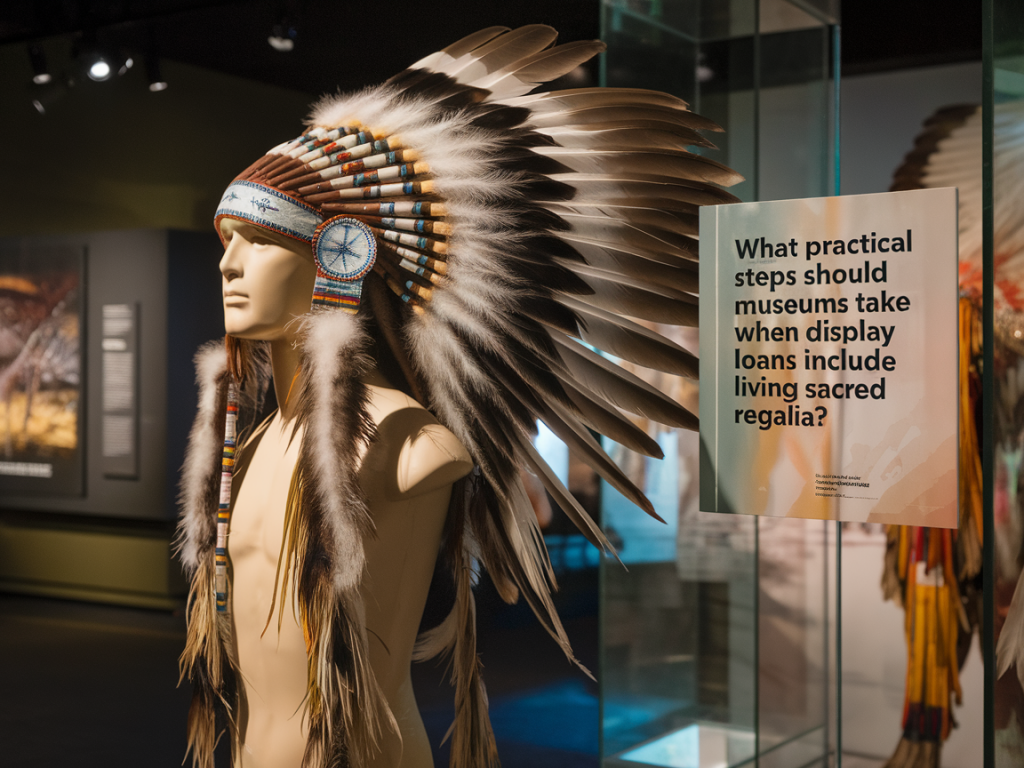
When a museum agrees to display living sacred regalia on loan, it is taking on a responsibility that extends far beyond transport logistics and label copy. These objects are not inert artifacts; they are embedded in ongoing practices, relationships and obligations. In my work with collections and communities I’ve seen how missteps can cause deep harm, and how thoughtful protocols can foster trust and meaningful exchange. Below I outline practical steps museums should take—grounded in respect, collaboration and clear accountability—when sacred regalia leaves a living context to enter a gallery.
Start with community-led conversations
The first step is obvious but often under-resourced: convene sustained, not token, conversations with the communities who are the stewards of the regalia. This means listening to elders, ritual specialists, curators within the source community, and younger custodians alike. Ask open questions: what conditions are non-negotiable for display? What ceremonies must precede removal? Are there seasons or people for whom the object should never be seen?
I’ve learned to treat that initial conversation as the baseline of any agreement rather than a preliminary formality. Document outcomes in writing, but also record oral statements where permitted. Use plain-language agreements that reflect cultural protocols rather than burying obligations in legalese.
Negotiate terms that respect ongoing life and authority
Loans of sacred regalia should be governed by agreements that go beyond standard conservation clauses. Practical elements to negotiate include:
Insist on including community representatives as signatories. When communities co-draft the loan contract, it becomes a tool for mutual accountability rather than a unilateral instrument.
Design display with cultural protocols in mind
Technical display planning should integrate cultural requirements. This affects lighting, orientation, proximity to other objects, case design, and interpretive text. Practical steps include:
Working with exhibit designers who have experience with living traditions helps. I’ve collaborated with independent fabricators and designers who can build bespoke cases that respect both conservation and ceremonial needs.
Plan for cultural and ethical interpretation
Interpretation must be co-authored wherever possible. Communities should have editorial input on labels, audio guides and multimedia. Practical steps include:
When communities decline explanatory text—for reasons of secrecy or sanctity—museums must respect that choice and design the visit around absence rather than forced disclosure.
Train staff across departments
Loans of living sacred regalia touch multiple museum functions: collections, exhibitions, public programs, security, front-of-house and marketing. Everyone needs clear briefings about the protocols in place. Practical training steps:
Staff training should be ongoing: protocols evolve and relationships deepen over the life of a loan.
Manage security and access sensitively
Security must be robust but not hostile. For sacred regalia, this means designing layered protections that allow custodians autonomy while preventing exploitation. Practical measures include:
In one project I observed how a museum replaced generic barriers with movable screens, enabling a ritual to take place without compromising climate control or security.
Ensure restitution and return pathways are clear
Loans of sacred regalia are sometimes precursors to longer-term repatriation conversations. Be explicit from the outset about the timeline and return conditions. Practical items:
Transparent exit clauses help build trust; communities need to know that the museum does not claim permanent custodianship by default.
Budget for cultural costs
Museums routinely budget for packing, transport and insurance—but rarely for the cultural costs: travel costs for custodians, ritual materials, honoraria for teachings, or fees for cultural advisors. Practical budgeting steps:
Funders like the Getty Foundation and the Esmée Fairbairn Foundation increasingly expect community collaboration; budgeting for it upfront avoids last-minute compromises.
Keep records, but respect secrecy
Document decisions, agreements and conversations. Yet also honour restrictions on recording sacred knowledge. Practical guidance:
Good documentation allows institutions to learn and transfer knowledge without appropriating what must remain private.
Build long-term relationships, not one-off loans
Finally, treat each loan as a step in an ongoing relationship, not a transactional event. Practical commitments include regular check-ins, shared programming, and pathways for collaborative research and co-creation. When museums invest in reciprocity—funding community-led exhibitions, supporting language revitalisation or helping preserve ritual spaces—the display of sacred regalia becomes part of a reparative practice rather than an extractive one.