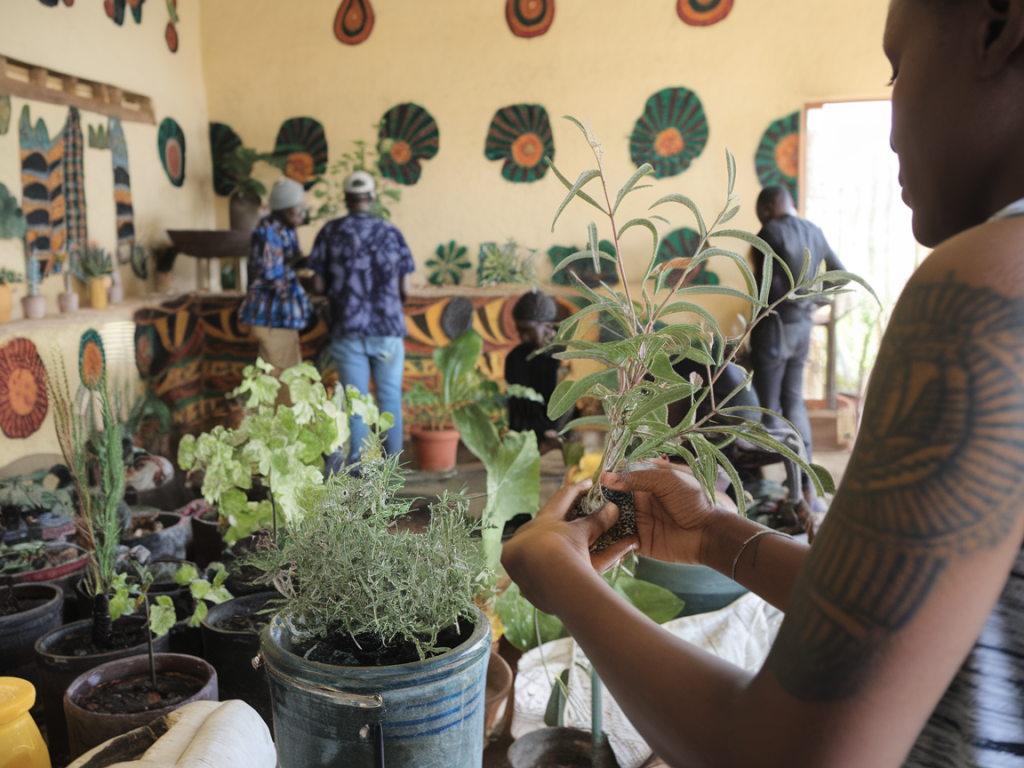
When I first started spending time in Accra, it was the small, peer-run repair shops and studio-labs tucked between markets and art spaces that kept pulling me back. These were places where knowledge circulated not as files or fetishised objects, but as gestures, jokes, weathered hands and the kind of trust that only builds through repeated, everyday collaboration. The question that has nagged me since then is simple and urgent: could a peer-led conservation lab in Accra become an exportable model without flattening or commodifying ritual knowledge?
Why a peer-led lab matters
I’m drawn to peer-led models because they privilege relationship over spectacle. Traditional conservation institutions often operate from a position of technical authority—treatment protocols, scientific analyses, climate-controlled cases. That expertise is vital, but it doesn’t always account for the living cultural frameworks that give objects their meaning. In many Ghanaian contexts, for instance, ancestral or ritual objects are inseparable from caretaking practices, custodial lineages and performative use. A peer-led lab, staffed by local conservators, custodians, artists and ritual specialists, can keep these layers alive.
Peer-led labs reorient priorities: they treat community knowledge as a form of conservation expertise, not as supplementary folklore. They open up conservation as a social practice—about negotiation, ongoing stewardship and context-aware decision-making. That’s exactly the approach that can resist commodification, if done with care.
What “commodifying ritual knowledge” really means
When I use the phrase commodifying ritual knowledge, I mean turning practices, meanings or sacred protocols into marketable products: guided experiences stripped of nuance, sellable ‘authentic’ handicrafts made for tourists, or research outputs that extract information without reciprocal benefit. Commodification often results from power asymmetries: outsider institutions with funding, audiences and publishing platforms taking ritual knowledge out of its custodial networks and placing it into circulation detached from its social life.
Peer-led labs can be vulnerable to these pressures too—especially if they attract international funding tied to display or publication metrics. So the challenge is to build a model that scales—shares methods, governance templates and training—without exporting the context-less parts that make ritual meaningful.
Core principles for an ethical, exportable model
- Custodial authority: The custodians of ritual items (families, priests, associations) must retain decision-making authority over access, documentation and treatment priorities.
- Reciprocity: Knowledge sharing should be reciprocal—capacity building, co-authorship, revenue sharing where applicable, and long-term commitments, not one-off trainings.
- Contextual documentation: Materials must be documented with their living contexts—performative use, restrictions, seasonal rhythms—rather than only technical condition reports.
- Consent and conditional use: Any external research or exhibition consent should be conditional, revocable and governed by community-drafted protocols.
- Non-market pathways: Create dedicated non-commercial archives and learning formats that are not monetised into tourist products.
Practical structures that worked in Accra (and can be adapted)
From my conversations with conservators, artists and custodians in Accra, several practices stood out as replicable without being extractive.
- Multi-stakeholder governance boards—composed of custodians, conservators, cultural workers and youth representatives—decide policies. These boards codify who can see or handle objects, how documentation is stored and how benefits are shared.
- Community apprenticeships—formalising the mentorships that already exist between elders and younger custodians. Apprenticeships are time-based and embed ethical training about secrecy and disclosure, not just technical skills.
- Contextual tagging systems—digital or analog metadata that flag sensitivity levels (public, restricted, sacred-only) and usage rules. This allows researchers to understand constraints without public exposure.
- Shared infrastructure—a modest lab with basic conservation tools, a humidity-controlled cabinet for fragile items and a community reading room. The lab is managed by peers, with an open calendar for custodial use.
Funding and economic models that avoid commodification
Funding is where good intentions often meet harsh realities. Donors frequently demand measurable outputs—exhibitions, catalogues, visitor numbers—that can push labs toward commodifying practices. Here are alternative funding approaches that I’ve seen hold up:
- Endowment-like community funds: Small, pooled funds governed by the multi-stakeholder board to cover running costs, paid by a mix of local government, philanthropic partners and income-generating but non-exploitative activities.
- Service-based incomes that respect ritual boundaries: Providing conservation training, condition reporting for private custodians, or digitisation services to archives—while explicitly excluding services that package ritual knowledge for tourism.
- Collaborative grants with explicit ethics clauses: Funders can be asked to sign agreements that prevent pressures to commercialise rites or to demand outputs that violate custodial consent.
Skills, tools and protocols to transfer—without transferring the sacred
Scaling the model isn’t about exporting sacred texts; it’s about exporting processes. These are the things that travel well:
- Participatory documentation methods: How to interview custodians, record use permission protocols and create layered metadata.
- Low-tech conservation techniques: Humidity control hacks, pest management using non-invasive methods, and modular storage solutions that can be built with local materials.
- Governance templates: Draft bylaws for board structures, consent forms, and benefit-sharing agreements that communities can adapt.
- Training curricula: Apprenticeship curricula that combine hands-on treatment with ethics modules co-authored with custodians.
Risks and how to mitigate them
No model is risk-free. Here are the main pitfalls and pragmatic mitigations that have emerged from my on-the-ground listening:
| Risk | Mitigation |
|---|---|
| External partners pressuring for sensational exhibitions | Include clauses in MOUs that require custodial approval for any public display or media use. |
| Local inequalities replicating within the lab | Ensure rotational leadership, paid apprenticeships and transparent hiring practices. |
| Digital leaks of sensitive ritual information | Use tiered access systems and store sensitive records offline with community trustees. |
Exportability: what to retain, what to adapt
Exporting the model means making a distinction between form and content. The form—the governance structures, apprenticeship frameworks, documentation habits and funding templates—can be shared and adapted. The content—specific ritual protocols, secret chants, lineage information—must remain with custodians unless explicit, ongoing consent is given.
In practical terms, I advise any group looking to replicate the Accra model to begin with a listening phase. Spend time in the communities you want to serve. Co-design the lab’s rules, not just its floor plan. Build reciprocal relationships with institutions that bring resources, but insist those institutions accept governance terms that protect custodial authority.
Some final (open-ended) reflections from Accra
What keeps returning to me is this: conservation that succeeds in defending ritual integrity is less about freezing objects and more about supporting the social ecologies that make them meaningful. A peer-led lab in Accra isn’t merely a technical hub; it’s a site of ongoing negotiation between past and present, secrecy and sharing, livelihood and reverence.
If we genuinely want to export that model, we must resist the easy currency of audiences and publication metrics. Instead, the measure of success should be whether custodians feel more empowered, whether apprentices inherit both care techniques and ethical commitments, and whether the living practices that surround objects are left intact—thriving, adaptable and free from commodification.