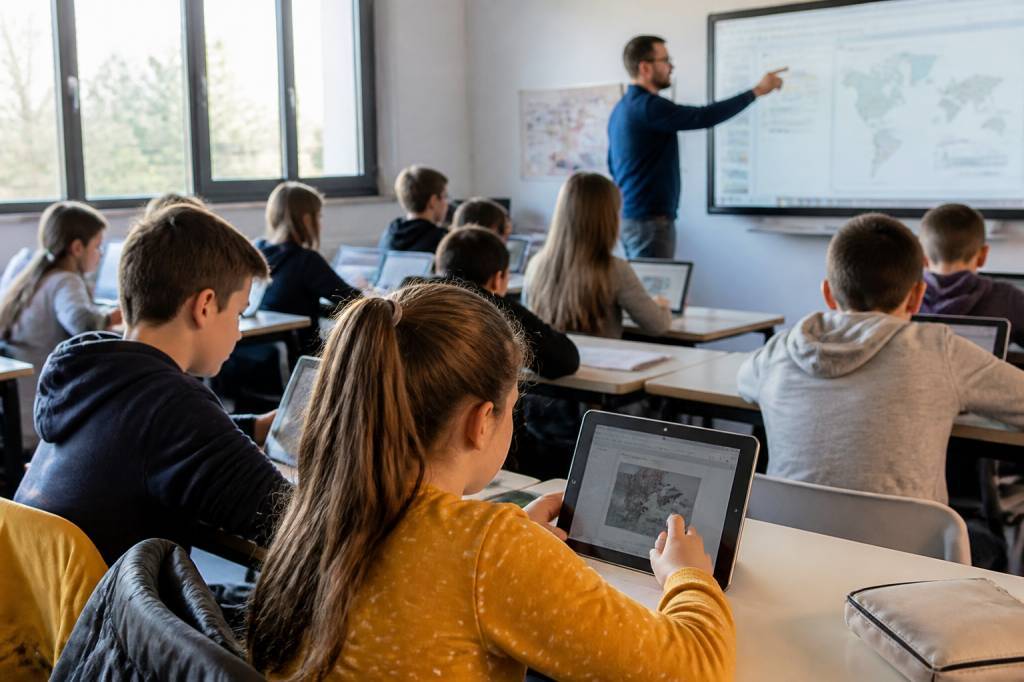
Technology is reshaping education across the world, and France is no exception. From interactive whiteboards to digital homework platforms, the modern classroom in France is evolving quickly. What was once a system known for chalkboards, notebooks, and textbooks is now blending traditional teaching with digital tools that change how students learn, how teachers teach, and how schools communicate with families. This shift is not just about devices in the classroom. It is about new habits, new expectations, and a new vision of what education can look like in a connected society.
Digital tools are becoming part of everyday learning
One of the most visible changes in French schools is the arrival of digital tools in daily lessons. Interactive whiteboards, tablets, laptops, and educational software are now common in many primary and secondary schools. These tools allow teachers to present lessons in a more dynamic way, combining text, images, videos, and quizzes in one lesson. Students can participate more actively instead of simply listening and copying from the board.
Digital learning platforms also give students access to exercises, corrected work, and extra resources outside class hours. This is especially useful for pupils who need more time to review a topic or who want to practice independently. In many schools, assignments are submitted online, which helps teachers manage work more efficiently and gives students faster feedback.
The use of technology also supports different learning styles. Some students learn best by reading, others by watching, and others by doing. Digital tools make it easier to offer multiple approaches in the same lesson. As a result, classrooms become more flexible and inclusive.
Teachers are adapting their methods
Technology is not replacing teachers in French schools, but it is changing what teachers do and how they do it. Educators are increasingly expected to combine subject knowledge with digital skills. They must know how to use learning platforms, manage online resources, and help students navigate digital work responsibly.
This evolution has encouraged more creative teaching methods. Instead of relying only on lectures, teachers can use videos, simulations, collaborative documents, and online quizzes to make lessons more engaging. In language classes, for example, students may listen to authentic audio recordings or exchange messages with other learners. In science, they may use virtual experiments to understand complex concepts. In history, digital archives and multimedia content can bring the past to life.
Professional development has become essential. Many schools and education authorities in France now offer training so teachers can improve their digital skills. This support matters because the success of educational technology depends on how well it is used. A tool is only effective if teachers feel confident integrating it into their lessons.
Students are developing new skills for the future
Technology in French schools is not only improving academic learning; it is also helping students build skills they will need later in life. Digital literacy has become a basic requirement in the modern world. Students must learn how to search for information, evaluate sources, create digital content, and communicate online in a responsible way.
These abilities are increasingly important for higher education and the workplace. By using technology in school, students gain experience with tools that they are likely to encounter in universities and professional settings. They also learn how to collaborate remotely, organize digital files, and solve problems using online resources.
Another important benefit is the development of autonomy. When students can access lessons, homework, and revision material online, they often become more responsible for managing their own learning. This independence can be especially helpful for older students preparing for exams such as the baccalauréat.
At the same time, teachers must guide students carefully. Digital independence should not mean working alone without support. Schools need to teach students how to stay focused, avoid distractions, and use information wisely. These lessons are just as important as mathematics or literature in today’s educational environment.
Communication between schools and families is improving
Technology has also transformed the relationship between French schools and families. Many schools now use online portals or applications to share timetables, grades, messages, and announcements. Parents can keep track of school activities more easily and communicate with teachers without waiting for a formal meeting.
This improved communication can strengthen cooperation between home and school. When parents are informed about their child’s progress, they can support learning more effectively. Schools can also send urgent updates quickly, which is useful for schedule changes, school trips, or important events.
Digital communication is particularly valuable in large schools and urban areas, where it can be difficult for staff to meet every family in person. It helps create a more responsive and transparent school environment. However, schools must make sure that communication remains accessible to all families, including those who may not be fully comfortable with digital tools.
The rise of online resources and blended learning
French schools are increasingly using a mix of in-person and online learning, often called blended learning. This approach combines traditional classroom teaching with digital resources that students can access from home or during independent study periods. It gives schools more flexibility and allows lessons to continue beyond the classroom walls.
Online resources may include educational videos, interactive exercises, reading materials, revision tests, and discussion forums. These resources are especially useful when students need to catch up after an absence or revise before an exam. They can also help teachers differentiate instruction by offering extra support or more advanced tasks depending on the learner’s needs.
Blended learning became more visible during periods of school disruption, but its value extends far beyond emergency situations. It offers a more adaptable model for modern education. Students can review material at their own pace, while teachers can use class time for discussion, practice, and deeper understanding. For a broader look at the evolving landscape of french school education, digital learning has become one of the most significant developments in recent years.
Digital inclusion remains a major challenge
Even though technology brings many benefits, it also creates challenges. One of the biggest concerns in French schools is digital inequality. Not every student has the same access to a computer, tablet, stable internet connection, or quiet study space at home. This can create differences in learning opportunities, especially when homework or revision depends heavily on online tools.
Schools and public authorities have been working to reduce these gaps, but the issue remains important. If digital education is to be fair, all students must have access to the basic tools needed to participate fully. Otherwise, technology can unintentionally widen existing inequalities instead of reducing them.
Another challenge is the variety of resources available. While some schools are well equipped, others still face limited budgets, technical problems, or outdated equipment. In such cases, even motivated teachers may struggle to use technology effectively. Long-term investment is necessary to ensure that all schools can benefit from digital transformation.
Screen time and student well-being are under discussion
The increasing use of technology in French schools has also led to debates about screen time and student well-being. While digital tools can improve learning, too much screen exposure may cause fatigue, reduce concentration, or affect posture and eye comfort. Educators and parents often ask how to balance useful digital work with healthy habits.
As a result, many schools try to use technology with moderation. The goal is not to replace all traditional learning methods, but to combine them intelligently. Reading printed books, writing by hand, and participating in face-to-face discussion still play a crucial role in education. Technology should support these methods, not erase them.
Schools are also paying more attention to online safety and responsible digital behavior. Students need to understand cyberbullying, personal data protection, and the risks of misinformation. These topics are now part of the educational conversation because children and teenagers spend a growing part of their lives online.
Artificial intelligence is beginning to influence education
One of the newest developments affecting French schools is artificial intelligence. AI-based tools can help personalize learning, correct exercises, suggest resources, and identify where a student may need more practice. These systems are still developing, but they already raise important questions about the future of teaching.
For teachers, AI may save time on routine tasks and allow more attention to be given to individual support. For students, it can provide immediate feedback and adapt to different levels of understanding. In theory, this could make learning more efficient and more tailored to each child’s needs.
At the same time, there are concerns about overreliance on automated tools, data privacy, and the need to preserve human judgment in education. French schools, like many others, must think carefully about how AI is introduced. The challenge is to use innovation without losing the human side of teaching, which remains central to learning and personal development.
Technology is changing school administration too
The transformation is not limited to teaching and learning. School administration in France is also becoming more digital. Attendance records, scheduling, report cards, and internal communication are increasingly managed through software systems. This reduces paperwork and helps schools operate more efficiently.
Administrative digitalization can save time for staff and improve organization. It may also make it easier to track student progress, manage resources, and coordinate activities across different departments. In larger institutions, this kind of system is particularly useful because it helps keep information centralized and accessible.
However, digital administration requires reliable infrastructure and proper staff training. Technical failures or poor system design can cause frustration rather than efficiency. For this reason, successful modernization depends on both technology and human support.
A changing vision of the classroom
The French classroom of today is gradually becoming more open, connected, and interactive. Students are no longer limited to a single textbook or a teacher’s explanation at the front of the room. They can explore multimedia content, collaborate online, and access learning materials in more ways than before. This does not eliminate the value of traditional education, but it adds new possibilities.
Technology is encouraging a shift from passive learning to active participation. Students ask more questions, work together more often, and interact with information in different formats. Teachers can observe progress more closely and adjust lessons more quickly. Families can stay better informed. Schools can become more responsive to the needs of a changing society.
France has a strong educational tradition, and that tradition continues even as the tools evolve. The challenge is to make sure that innovation serves learning, rather than distracting from it. When used thoughtfully, technology can help French schools become more inclusive, more efficient, and better prepared for the future.
The future of French education will remain hybrid
Looking ahead, it is unlikely that French schools will return to a completely non-digital model. Technology is now embedded in expectations, habits, and educational policy. But it is equally unlikely that screens will replace every aspect of school life. The future will probably remain hybrid, combining the strengths of digital tools with the strengths of human interaction.
This balance is what makes the current transformation so important. French schools are not simply adding gadgets; they are redefining how knowledge is shared and how young people prepare for life in a digital society. Success will depend on equitable access, thoughtful teaching, strong training, and a clear focus on learning outcomes.
As technology continues to evolve, French education will continue to adapt. The classrooms of tomorrow may look different, but the goal will stay the same: helping students grow, think critically, and succeed in a world that is changing faster than ever.