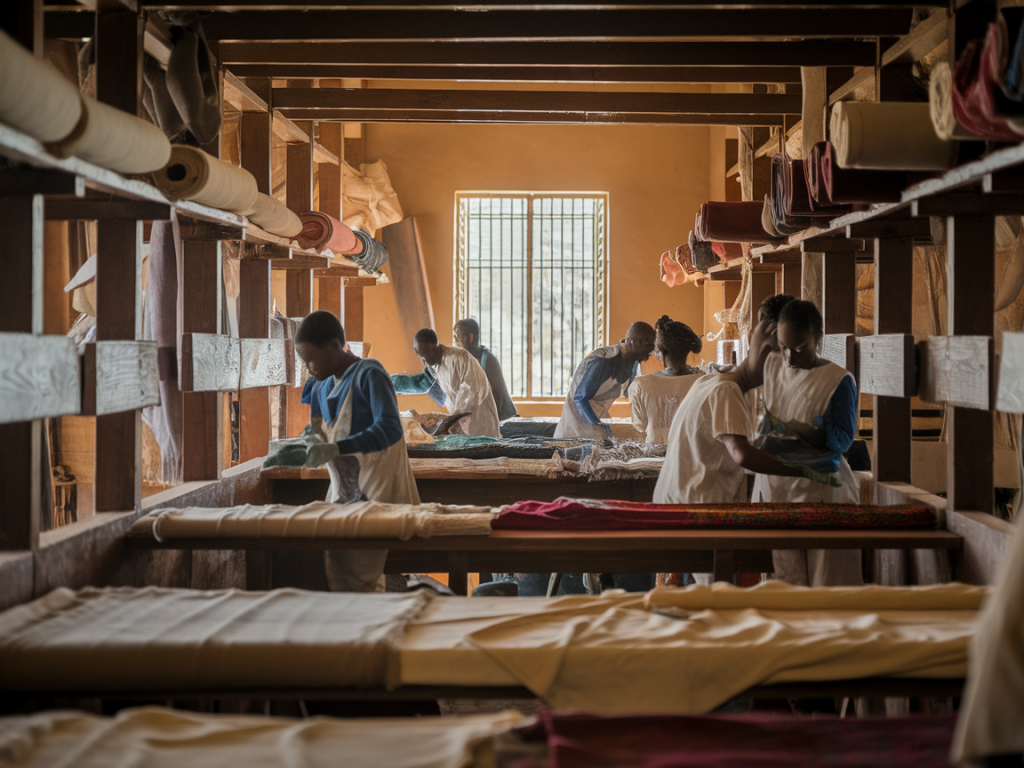
When I first stepped into a small conservation studio in Accra, I was struck by two things: the sound of conversations as much as the smell of starch and wax, and the quiet authority of a space run by a cooperative of textile artisans, conservators and community elders. They were repairing kente and locally woven textiles with the same careful touch I had seen in major museums, but the priorities were different—repair, yes, but also storytelling, shared ownership and an insistence that preservation should be useful to the community, not merely the object’s future display.
Why a cooperative-run lab matters
Traditional conservation models often sit within national institutions or university departments. Those structures can be excellent at technical preservation, yet they frequently reproduce power imbalances: decisions about what is preserved, how it is interpreted and who controls access are made far from the communities who gave life to the objects. A cooperative-run lab in Accra reframes that dynamic. It embeds conservation within local social networks and places community priorities—memory, ritual continuity, livelihoods—alongside material stability.
But turning a local, community-oriented lab into a node of an ethically governed global archive is not a matter of scaling up fast. It requires careful, iterative design across governance, technical systems, funding models and relationships with global institutions.
Governance: building trust as infrastructure
From my conversations in Accra, governance is the first and most enduring challenge. Without it, digital surrogates and databases risk becoming extractive assets rather than shared resources.
Here are governance principles I’ve seen work in similar contexts—and that I’d advocate for this project:
Practically, governance can be formalised through a federated council: cooperative representatives, community elders, a technical advisory group, and external ethics advisors (perhaps from institutions like the International Council on Archives or the Association of Critical Heritage Studies). The council drafts an access and use policy that accompanies every digital record.
Technical architecture: federation, not centralisation
If the goal is an ethically governed global archive, the architecture must mirror the governance: decentralised, federated and transparent.
Centralised repositories can be single points of failure and control. Instead, I recommend a federated model where the Accra lab hosts a local node—controlling high-resolution images, raw conservation reports and sensitive metadata—while exposing a curated subset to a global index. Technically this can be achieved using established protocols such as IIIF (International Image Interoperability Framework) for images and linked data standards (RDF, JSON-LD) for metadata.
Advantages:
Metadata that speaks more than object labels
Metadata is often treated as a technical afterthought; in community-led archives it becomes a place of cultural work. We must expand metadata fields to include:
Capturing oral histories and community annotations requires simple, accessible tools. Open-source platforms like Mukurtu—which was designed for indigenous communities and supports cultural protocols—offer useful models. Mukurtu allows community-defined access levels and integrates multimedia, which fits the cooperative's needs well.
Training and capacity-building
Scaling is impossible without human capacity. The cooperative lab must be a training hub.
Partnerships with universities and vocational schools can deliver accredited courses. I’ve seen successful hybrids where local trainees co-teach workshops—combining scientific conservation methods with textile artisanship skills—creating a two-way flow of knowledge. Brands like Aesop or textile companies occasionally fund such capacity programmes as part of corporate social responsibility or cultural stewardship initiatives; those funds should be accepted selectively and under strict visibility and benefit-sharing conditions.
Funding models: mixed, transparent and sustainable
Relying solely on grants is precarious. A resilient cooperative lab uses mixed revenue streams:
Transparency is crucial: cooperative financials and allocation policies should be publicly available to build trust and avoid suspicions of capture by external interests.
Partnerships and reciprocity
Global archives and museums can be powerful allies—providing technical expertise, digitisation equipment and exhibition platforms. But these relationships must be reciprocal:
I would be wary of partners that only seek branding benefits. The cooperative should vet partnerships against the governance charter and require memoranda of understanding specifying data sovereignty, crediting, and financial terms.
Ethics and contested heritage
Textiles are rarely neutral. They carry contested histories of trade, colonialism, labour and migration. An ethically governed archive cannot avoid politics. It must:
These are uncomfortable tasks, but they are also opportunities: archives that foreground complexity become sites for reparative work and public education.
Scaling without losing soul
Scaling a cooperative-run lab in Accra into a global archive is as much cultural work as technical. The temptation is to export a model verbatim to other places. Instead, the cooperative should serve as an architectural prototype—its governance and technical tools adaptable rather than replicated wholesale. A global federation of community labs, each with its own bylaws but connected by shared standards and a mutual aid fund, would better protect diversity and local sovereignty.
| Area | Local Priority | Global Mechanism |
|---|---|---|
| Ownership | Collective cooperative control | Federated repository with linked records |
| Access | Ritual/community first | Tiered access protocols (IIIF/Mukurtu) |
| Funding | Local services, training | Ethical licensing, grants, revenue-sharing |
| Training | Apprenticeships, artisan skills | Accredited exchange programs |
Walking out of that Accra lab, I felt optimistic. The work done there is not merely conservation—it's cultural stewardship, economic empowerment and political negotiation. If done well, scaling can create a new kind of archive: one where textiles carry the fingerprints, voices and consent of their communities into a global digital commons governed by ethics as much as by bytes.