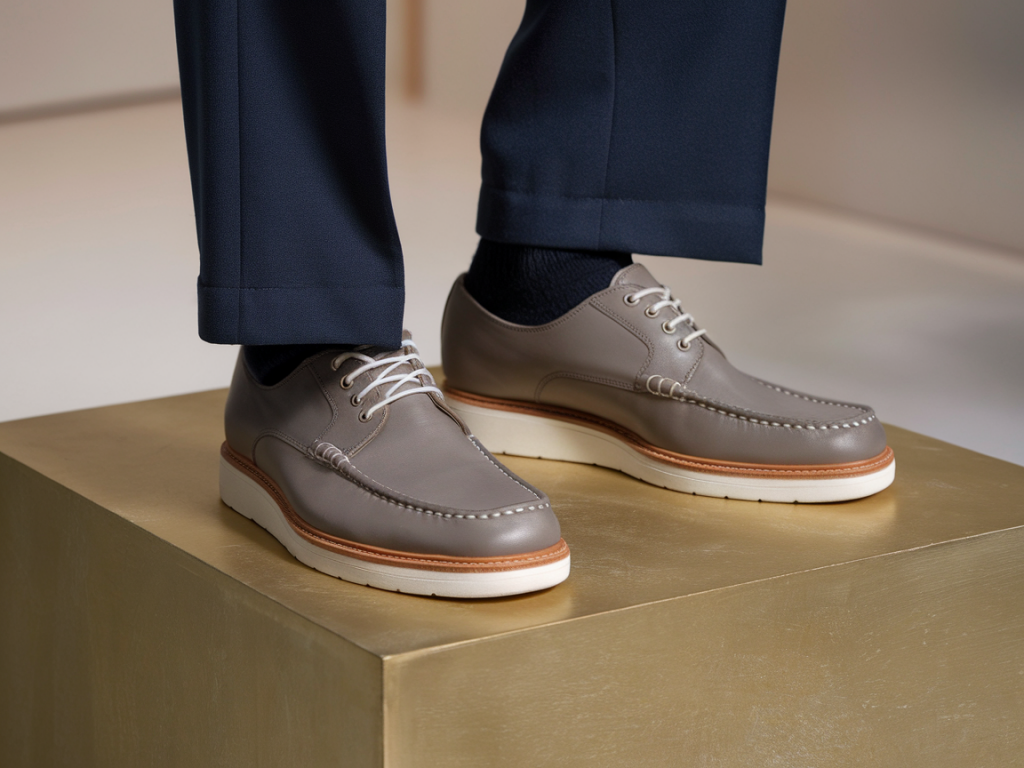
Why I keep coming back to height increasing shoes
I've long been fascinated by the small design choices that alter how people move and how they are perceived. Height is one of those immediate, visual signals; it reshapes posture, voice projection and often how people orient themselves socially. That's why I pay close attention to height increasing shoes — not as a gimmick, but as an object that intersects craft, ergonomics and self-presentation.
The promise: discreet lift, visible confidence
When a maker claims an "engineered height system" that adds 2 to 4 inches invisibly, my radar goes up: is this comfort, style and biomechanics, or just hidden platforms that look awkward? With quality brands — and Mario Bertulli, a name in this field since 1960, is a prime example — the goal is subtlety. The internal architecture is built so that no one looking at your shoes can guess they contain a lift, while you feel taller and walk with more presence.
How these shoes actually work
The secret lies in layered internal components rather than obvious external platforms. Typical elements include:
Combined, these parts create a discreet gain in height while maintaining a natural silhouette. The best examples are made with care in Europe and use premium Italian leathers that drape and crease like any high-end shoe — which helps conceal the internal lift.
Style ranges: from formal to sneakers
One misconception is that height increasing footwear forces you into an obvious “lift” aesthetic. Not so. The contemporary offering covers a wide spectrum:
For events like galas I opt for a well-made black leather oxford; for weekends a leather-trimmed sneaker with a hidden lift keeps proportions natural and posture improved without shouting style choices.
Comfort and biomechanics: what to expect
Raising your heel changes how weight is distributed across the foot. Good brands engineer stability into the shoe so your gait stays natural. In my experience, the features that reliably separate comfortable height increasing shoes from poor ones are:
When all those elements are in place, you gain both a few centimeters and a more upright posture — which often translates into improved vocal projection and the subtle boost in charisma people talk about.
Practical tips: buying, sizing and breaking-in
From trying on pairs to living with them, here are the practical lessons I’ve picked up:
Health considerations and posture
People worry that lifts cause back problems. It depends on quality and how long you wear them. A well-designed internal lift supports the arch, encourages a more upright stance and can even relieve some lower-back tension by improving pelvic alignment. Problems arise when the shoe lacks support or when the wearer expects an instant change without adapting to the new geometry. I recommend:
Care and longevity
Caring for these shoes is no different from caring for other high-quality leather footwear, and that longevity is an integral part of the product's value. Essentials include:
With attentive care, these shoes are a lasting investment rather than a short-lived novelty.
Comparing brands and the market
There are many entrants now in the height-increasing market, from mainstream sneaker labels to boutique shoemakers. What marks out a maker like Mario Bertulli is a lineage of shoemaking since the 1960s, an insistence on European production standards and the use of premium materials. When comparing, look for:
Common questions readers ask
| Will people notice my shoes are taller? | Not if the lift is internal and the shoe silhouette is proportionate. High-quality designs hide the height gain in the midsole. |
| Are these shoes only for insecure men? | No. Many wear them for posture, stage presence, or simply because they like the way tailored trousers hang with a slightly higher stature. |
| Can I wear them all day? | Yes, if they are made with ergonomic materials and you break them in gradually. Lightweight midsoles and proper arch support make all-day wear feasible. |
Where this fits editorially
At Sacredskulls Co, features often explore objects that carry cultural meaning beyond their utilitarian purpose. Height increasing shoes are exactly that: craft objects that mediate identity, posture and social perception. When a pair is well-made — with a discreet engineered system, quality Italian leather and a commitment to service and repair — it becomes part of a personal toolkit for how one wants to move through the world.
In practice, picking the right pair requires attention to fit, an understanding of biomechanics and a willingness to invest in materials and repairability. Done well, these shoes don't shout. They simply let you walk a little taller, with more ease and curiosity about what the day will bring.