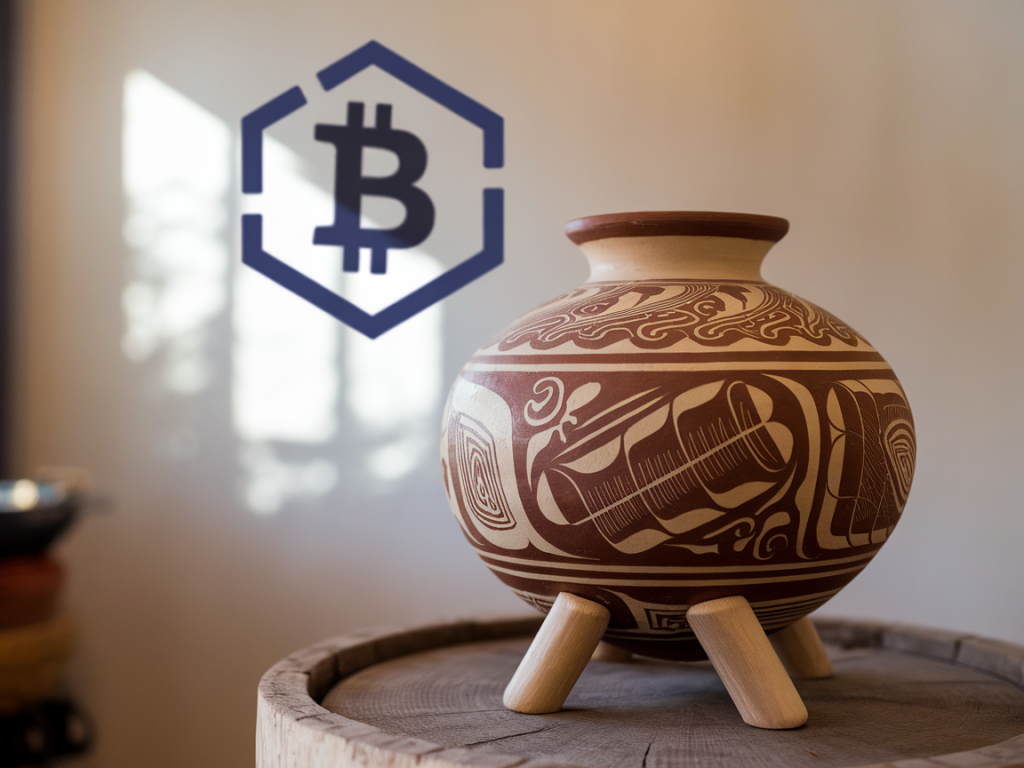
I first started thinking seriously about digital provenance for ancestral ceramics after a visit to a regional museum where a drawer of unlabelled pots sat in near-darkness. The objects were beautiful, fragile and, crucially, disconnected from living communities who might recognise them. Conversations about digitising collections often slide quickly into the rhetoric of blockchain and NFTs as if a ledger alone can solve centuries of colonial extraction. That’s where I want to push back: can blockchain provenance protect ancestral ceramics without turning them into speculative digital commodities? My answer is cautiously yes—if we design systems around consent, community governance and the specific needs of heritage, not around market hype.
Why people think blockchain could help
At its simplest, blockchain offers three things that appeal to museums, researchers and descendant communities: immutability (records that are hard to alter), decentralisation (no single institution controls the data), and traceability (a chain of custody or events). For ceramics—objects that travel, are repaired, mislabelled, looted, or sold—those properties can help create a reliable record of provenance, restorations, ownership, legal status and repatriation claims.
Platforms like Artory and Verisart have been working on art-world provenance registries for years; others such as Provenance.org or bespoke projects built on Hyperledger or Tezos offer technical paths toward accountable records. The idea is appealing: attach a digital record to an object so that anyone can verify its history. But that’s where the nuance has to start.
Why NFTs are the wrong fit for ancestral objects
NFTs—non-fungible tokens—have become shorthand for anything blockchain-related in culture. But NFTs are fundamentally a marketplace tool: they encode uniqueness in a way that often facilitates buying and selling, speculation and fractional ownership. For ancestral ceramics, those affordances are not simply unnecessary; they can be actively harmful.
In short, turning an ancestral pot into an NFT might protect some metadata, but it also risks commodifying a living cultural expression and exposing it to speculative markets.
What a better blockchain-based provenance could look like
We need to separate the technical benefits of blockchain from the market-oriented template of NFTs. Here are design principles I think are essential:
Examples and emerging practices
Some real-world efforts point to what’s possible. Verisart has combined blockchain notarisation with museum workflows, while Artory provides provenance records without pushing objects onto speculative marketplaces. Universities and cultural institutions are experimenting with distributed identifiers (DIDs) and linked open data to describe objects and their relationships rather than create marketable tokens.
There are also conservation-friendly tagging systems: microdot labels and NFC tags that carry an immutable hash linking to a ledger entry. Importantly, these physical tags can be designed to be reversible and minimally invasive—critical when dealing with fragile ceramics.
Ethical, legal and practical hurdles
Blockchain is not a magic bullet. Implementing a responsible provenance system requires confronting a number of challenges:
Practical steps for institutions and communities
If you’re a curator, a community leader, or a funder wondering how to proceed, these are pragmatic steps I recommend:
Small experiments, big responsibilities
My sense is that the most promising projects will be modest, reversible and community-led. We should prioritise pilot projects that prove the social and ethical model before investing in large-scale technical deployments. Protecting ancestral ceramics with blockchain is possible—but only if we align the technology with human values: respect, restitution, shared authority and a refusal to turn heritage into a speculative asset. If we can keep those priorities front and centre, a ledger can become a tool of accountability rather than a marketplace for loss.