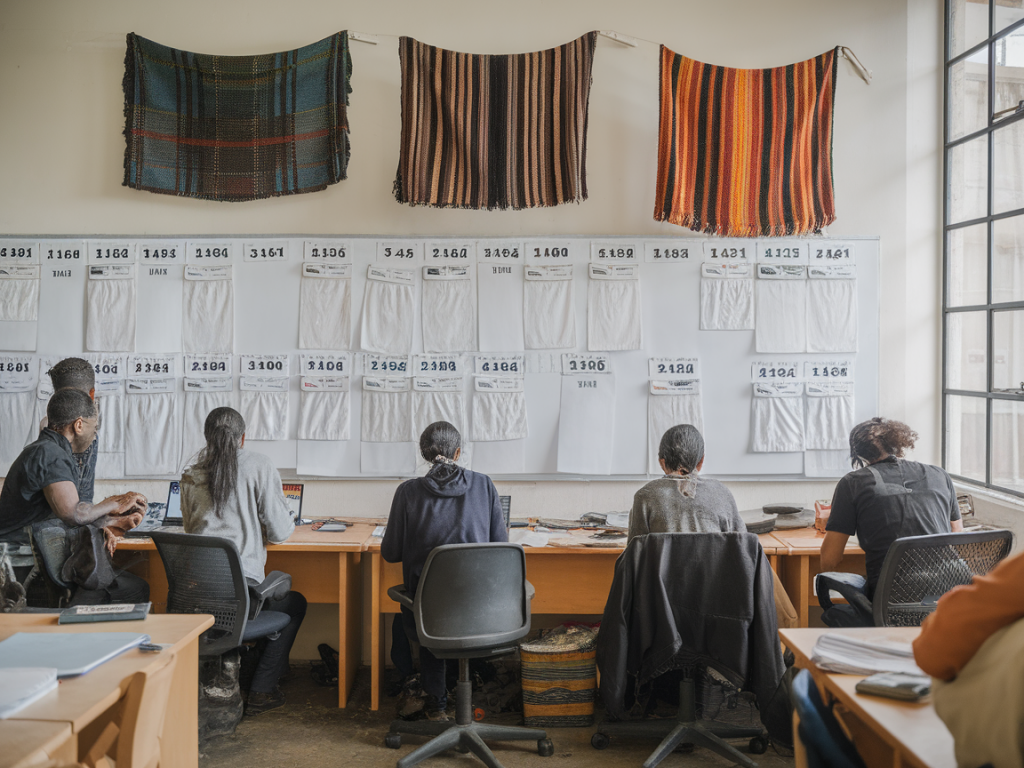
When I first began researching West African textiles, I was struck by how much of their story is written in absence: missing labels, severed oral histories, and the quiet erasure of context that turns living cultural objects into anonymous commodities. Kente cloths, bogolans, aso-oke pieces—each carries deep social, political and ceremonial meanings that strip away when detached from their communities of origin. That detachment is not accidental. Looting, illicit trade and opportunistic collecting feed off opacity. So I started asking: could a community-run provenance database change that dynamic?
Why provenance matters for textiles
Provenance is more than a chain of custody. For West African textiles it is testimony: who made the cloth, which loom or dye technique was used, the occasion it was woven for, and the person who commissioned or wore it. That contextual information restores dignity and meaning. It also creates a defensive layer against looting and illicit sales. When an object’s story is recorded openly and trusted by communities, museums, buyers and researchers, it becomes harder to pass it off as anonymous booty.
I’ve seen this work in smaller pockets: a village elder cataloguing a ritual wrapper before it leaves for a diaspora exhibition, or a cooperative photographing weavers’ signatures on bands and storing them locally. But these efforts are fragmented. A community-run provenance database aims to scale that intimacy—keeping control in the hands of those who know the stories best, while making verified information accessible to legitimate users globally.
What would a community-run database look like?
Envision a digital platform designed and governed by textile communities across West Africa, with these core features:
These elements maintain community control over what is visible and to whom, while building a public record that counts.
Can technology stop looting?
Technology alone won’t stop the people who profit from looting, but it changes the calculus. When an auction house, museum or collector can (and is encouraged to) query a community-verified database before acquisition, the bar for provenance is raised. Sellers offering textiles without records face scrutiny and reputational risk. Marketplaces can incorporate API checks: listings of West African textiles could trigger a provenance prompt or a warning if no corresponding community record exists.
There’s a cautionary tale around over-reliance on techno-fixes. Blockchain has been proposed as a tamper-proof ledger for provenance, and I understand the appeal: immutability, traceability, and the promise of decentralization. But for communities I work with, the critique is practical and ethical. Blockchain systems often require technical literacy, reliable internet, and external validation—resources that some communities lack. They can also lock cultural data into opaque platforms controlled by venture capital. A community-run database should prioritize low-tech accessibility and community governance rather than fetishise novelty.
Who needs to be at the table?
Success depends on bridging gaps between makers, local custodians, national heritage bodies, museums, academics and commercial platforms. Key participants should include:
Without genuine community leadership the project becomes extractive: yet another archive controlled by outsiders. Governance models should enshrine decision-making power with local stakeholders—who determine what to record, what to share and how to use the data.
Challenges and trade-offs
There are real risks. Documenting the provenance of sacred textiles can expose them to new threats if those records fall into the wrong hands. Some items are sensitive precisely because they belong to ritual spheres closed to outsiders. A database must therefore include consent protocols and granular privacy settings. Shameful histories of colonial appropriation also mean communities may distrust museums or researchers; transparency about how data is used and protected is non-negotiable.
Funding is another sticking point. Building and maintaining such a platform demands sustained resources—technical support, training, local coordinators, and data stewardship. Donor-driven projects can evaporate when funding cycles end. That’s why I advocate for a hybrid model combining philanthropic seed funding with revenue-generating services: digitisation-as-a-service for local partners, ethical certifications for buyers, or training programmes for heritage professionals.
Practical steps I’ve seen work
From my field visits and conversations I’ve watched several effective practices emerge that could be scaled:
What success looks like
In a best-case scenario, a networked, community-run provenance system shifts power back to makers and custodians. Looters lose anonymity; buyers gain confidence and, crucially, knowledge; museums are better equipped to ethically acquire or repatriate. But success isn’t only measurable by fewer objects on the black market. It’s also measured in restored narratives: an aso-oke piece whose story—who commissioned it, which ceremonies it belonged to, who the weaver was—is no longer lost. It’s about communities reclaiming the right to tell their textiles’ stories on their own terms.
I don’t pretend this is easy or immediate. It requires humility, legal frameworks that respect community rights, patient technical design, and sustained funding. But when cultural heritage is treated as a living, communally governed resource rather than a collectible commodity, the incentives that fuel looting begin to change. I’ve seen small victories—the caption under a museum object amended after consultation, a seller pulled from a marketplace after provenance checks, a village youth program teaching metadata entry—and those accumulate.
| Problem | Community database response |
|---|---|
| Anonymous market listings | Cross-checkable community-verified records and mandatory provenance fields |
| Loss of ritual context | Tiered privacy settings keeping sensitive information restricted |
| Technical exclusion | Offline-capable apps, local training and multilingual interfaces |
| Short-term project funding | Revenue models and institutional partnerships for sustainability |
If you care about the future of West African textiles—whether as a collector, curator, scholar or simply a curious reader—supporting community-controlled provenance isn’t just ethical theatre. It’s a practical strategy to protect material culture, restore histories and ensure that the cloths continue to speak for the people who made and cherished them.