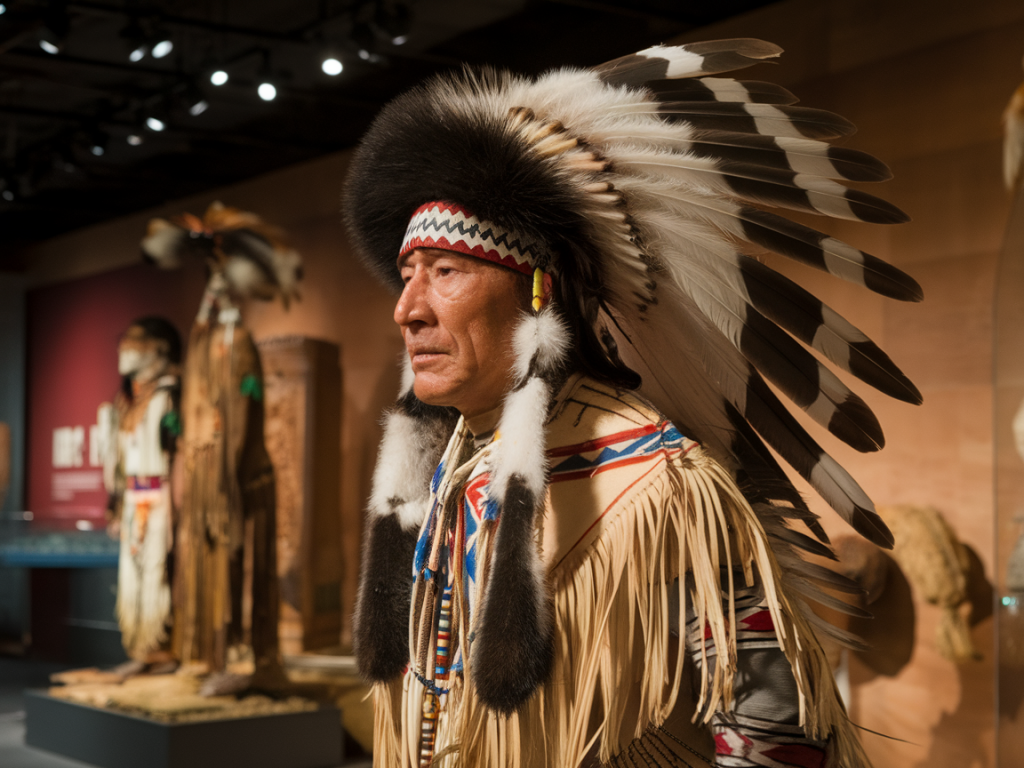
When a diasporic ritual specialist offers to loan wearable sacred regalia to a museum, gallery or cultural festival, the exchange is never just about objects. I’ve learned—through interviews, fieldwork and countless conversations with curators and community holders—that these garments, masks, crowns or beaded belts carry living relationships, obligations and meanings that resist static display. Asking the right questions before accepting a loan is as much about respect and reciprocity as it is about conservation and logistics.
Why questions matter
I approach every loan as an interaction between people first, objects second. A failed conversation can turn a generous act into a harm: ritual specialists can feel exposed, communities can feel misrepresented, and institutions can inadvertently display sacred items in ways that violate protocols. Questions help map the unknowns—about provenance, use, authorisation and the ongoing life of the object—so we can design exhibitions that honour both material and immaterial heritage.
Key ethical and practical questions to ask
- Who is the rightful custodian or authority? Ask whether the person offering the regalia is the authorized ritual specialist, a direct descendant, or an intermediary. In diasporic contexts, custodianship can be distributed across lineages and locales; clarity matters.
- What is the item's provenance and life history? Where did the item originate? Has it circulated between families, markets or institutions? Who consecrated it, and when was it last used in ritual?
- Is the item still ritually active? Some regalia are dormant; others are still invoked in ceremonies. Active regalia may require specific handling, storage, and display parameters—or might not be displayable at all.
- Are there cultural protocols for display, handling, or gendered restrictions? Many traditions have strict rules: who may touch or see the object, dress codes for viewers, or rituals to perform before exposure. These protocols may travel with the object and should be observed where possible.
- Who gives consent and how is it documented? Consent can be communal, hereditary or individual. Ask how consent has been negotiated and whether it can be documented in a way that respects non-Western decision-making processes.
- What are the obligations around photography, recording and publication? Some ritual specialists permit academic photography but forbid public images; others allow social media dissemination only under certain conditions. Clarify permissions and limits early.
- How should the object be interpreted? Who will provide interpretive text, labels or audio content? Are community members available to co-curate narratives, or would they prefer anonymity?
- Will the object require re-consecration or deconsecration for display? This is a sensitive question. Some communities expect an item to be ritually neutralised before it can be safely exhibited; others insist on ritual action before and after display.
- What fees, insurance and compensation are appropriate? Compensation can include loans fees, per diems, travel, honoraria for elders or ritual specialists, and payments for curatorial labour. Insurance should reflect the cultural value and replacement cost, and arrangements should be transparent.
- What are the loan, transport and storage conditions? Temperature, humidity, pest control, packing materials and handling protocols need alignment between lender and institution. Ensure transporters are trained to respect both conservation and ritual sensitivities.
Operational questions that protect both parties
Beyond ethics, there are nuts-and-bolts queries that prevent misunderstandings.
- Loan duration and return conditions: Is the loan for a temporary show, long-term display, or indefinite study? Who decides on extensions?
- Security and access: Will the regalia be behind glass, in a controlled room, or integrated into live performance? How will staff control access for rituals?
- Conservation interventions: What conservation treatments are permitted? Some communities prohibit invasive treatments or synthetic materials.
- Label wording and display context: Are there terms, names or phrases that must be used or avoided? Who approves final wall text?
- Contingency plans: What happens if the object is damaged, stolen or contested while on loan? Agree on dispute resolution mechanisms in advance.
A practical checklist (table)
| Area | Questions to resolve | Action |
|---|---|---|
| Custodianship | Who authorises the loan? | Obtain signed letter/statement from authority or community body |
| Ritual status | Active, dormant or restricted? | Document status and required protocols; plan display accordingly |
| Permissions | Photography, recording, publication? | Agree and record explicit media permissions |
| Compensation | Fees, honoraria, expenses? | Budget and set clear payment schedule |
| Conservation | Treatments allowed? | Prepare conservation plan approved by lender |
| Legal | Insurance, customs, export? | Secure paperwork and appropriate insurance |
| Interpretation | Who writes labels? | Co-curate text; include community voice where possible |
How to ask without imposing
In my conversations with diasporic ritual specialists, a common theme emerges: questions must be posed with humility. Don’t lead with institutional assumptions. Start by listening. Ask open-ended questions like:
- "Can you tell me about the object's life and how it is used?"
- "What would make you and your community comfortable about showing this item?"
- "Are there things we should absolutely avoid doing or saying?"
Follow with pragmatic proposals and invite counter-offers. Offer to draft agreements collaboratively and to revisit them if circumstances change.
Community co-curation as standard practice
True collaboration looks like shared authority. Invite ritual specialists and community representatives to participate in label-writing, public programming and security planning. If travel logistics permit, cover costs for elders or ritual specialists to be present for opening events or perform necessary rites. When in-person presence is impossible, support remote participation: recorded blessings, live-streamed talks or community-authored digital content can retain agency.
When display isn't the right choice
Sometimes the answer to the initial question is "don’t exhibit." I’ve had lenders withdraw at the last minute because of a familial objection, or ask for stricter access than the institution could provide. Respect that. Offer alternatives: high-quality digital surrogates, loaning non-sacred replicas, or a closed storage loan used for study by authorised persons only. These options can maintain relationships without compromising ritual integrity.
Negotiating museum practice and ritual life
Museums have a duty of care, but they also need to recalibrate standard policies—insurance, conservation standards, and display techniques—to fit the living logics of diasporic ritual objects. That may mean accepting greater guard presence during certain viewings, using display cases that permit limited access for rites, or revising lighting and mounting solutions to accommodate fragile fabrics or beadwork. Brands and suppliers matter here: consider conservation-grade materials from reputable suppliers (e.g., Gaylord Archival for mounts and storage) while ensuring these do not contradict ritual coatings or treatments.
Finally, remember that questions are the start of a relationship, not a checklist to tick off. The quality of the dialogue—its patience, transparency and willingness to adapt—will determine whether the exhibition amplifies a living tradition or flattens it into an object. I try to keep that tension in view every time a diasporic ritual specialist entrusts an item to an institution. It’s an opportunity to do better, together.