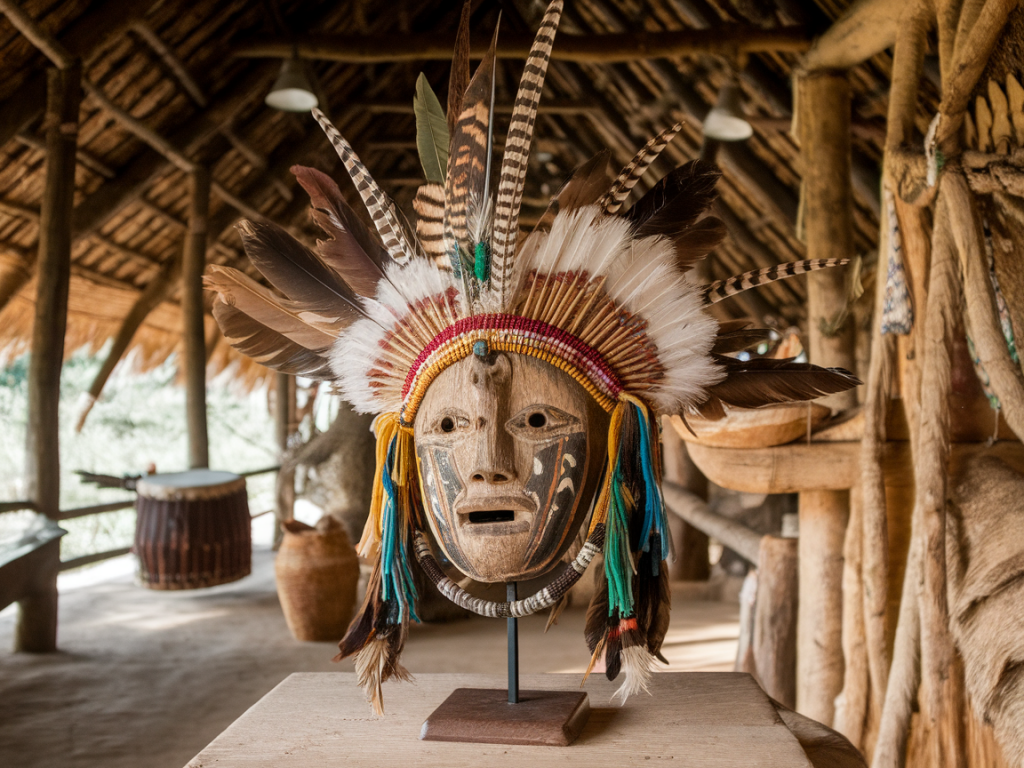
When a ritual mask returns to the village from which it was taken—whether after a museum deaccession, a restitution campaign or the quiet work of dedicated curators—it does not simply re‑enter a cupboard. It arrives with layers of history, expectation and responsibility. I have followed several such returns in my work: the thrill of reunion, the awkwardness of interpretation, the complex negotiations over care and access. The real task, I’ve learned, is not just to receive the object, but to translate that presence into sustainable cultural renewal that benefits the whole community.
What does “translation” mean in this context?
By translation I mean the process that transforms the mask from a static artefact into a living element of local cultural life. That involves more than conservation and display. It includes re‑establishing ritual uses where appropriate, creating new educational and economic opportunities, and developing local capacities to manage and interpret the object over the long term. Translation is both symbolic and practical: it restores meaning, but it must also build durable infrastructure so that the mask contributes to community wellbeing rather than becoming a liability.
Start with deep listening and consent
The first step—always—is listening. Who in the village has authority or custodial claims? Are there elders, secret societies, lineage custodians or younger activists with different visions? A returned mask can reopen old wounds or heal them. You cannot pre‑determine the outcome. Hold open forums, one‑to‑one conversations, and structured listening sessions. Document these discussions transparently. In a recent project I observed, a museum provided small grants for community meetings and paid local scribes to record consent protocols: a modest investment that paid back in legitimacy.
Care and conservation that respects local practices
Conservation debates can be fraught. Museums often prioritise stabilisation and climate‑controlled storage; communities may prioritise the mask’s performability and patina. The creative solution I’ve seen work is a hybrid care plan co‑designed by conservators and local custodians. This can include:
Brands and organisations like TESA (small portable humidity monitors) and even simple solutions—silica gel packets, museum‑grade acid‑free tissue—can be introduced as practical tools. But the emphasis must remain on capacity building rather than one‑off interventions.
Reimagining display and interpretation
When I walk into village museums—often modest rooms in community centres—the assumed mode of display is vitrines and labels. That can be appropriate, but it can also freeze the mask’s story into a single museum voice. Co‑curation changes that. Invite storytellers, ritual elders, youth groups and schoolteachers to shape how the mask is shown. Practical approaches include:
These methods decentralise authority and create a richer visitor experience. Digital born‑in‑the‑village content—short films produced with smartphones and edited with simple tools like Adobe Premiere Rush—can be hosted on the museum website and shared with diaspora communities.
Ritual use, legal frameworks and insurance
Ritual use is often the most contentious issue. Some communities want the mask to resume its ceremonial life; others prefer a more symbolic association. Practical governance needs to be structured and legally clear. Draft a memorandum of understanding (MOU) that addresses:
Insurance is a tricky but solvable problem. Local insurers may not cover ritual use; international cultural property insurers can, but at a cost. Funds set aside for conservation and repair—sourced from grants or revenue streams—are often a pragmatic alternative to expensive policies.
Education, schools and youth engagement
Sustainable renewal depends on the next generation. I’ve seen village museums partner with nearby schools to create curricula that weave the mask’s story into language lessons, history classes and arts workshops. Practical programmes include:
These activities cultivate pride and build a constituency that will defend and sustain the museum in years to come.
Economic models that do not commodify the sacred
Generating income is essential, but it must be ethically grounded. Sustainable models I’ve encountered include:
It’s crucial to avoid commodification—selling “authentic” ritual experiences to tourists can erode meaning. Clear codes of practice and community governance can help balance income generation with respect.
Partnerships, networks and long‑term funding
A village museum rarely has the resources to sustain ambitious programmes alone. Strategic partnerships matter: universities can support research; regional museums can provide loaned expertise; NGOs can help with fundraising. Create a simple partnership table to structure relationships, responsibilities and timelines:
| Partner | Role | Timeline/Output |
|---|---|---|
| Regional museum | Conservation training, curatorial visits | 6 months: training module delivered |
| Local school | Curriculum integration, student programmes | Ongoing: termly workshops |
| University department | Oral history research, internships | 1 year: archive created |
| Funding NGO | Micro‑grants for events and repairs | Annual grant cycle |
Smaller, reliable streams of income and support—rather than one large grant—can be healthier, reducing dependency and encouraging local initiative.
The role of digital repatriation
Digital technologies can augment physical repatriation. High‑resolution 3D scans, digitised archives and online exhibitions allow diaspora communities and researchers to access the mask without putting it at risk. But digital is not a substitute for the physical: it’s a complement. When I worked on a project where the mask remained in the village but the archive was hosted online, we saw increased school engagement and international interest that translated into small but meaningful donations.
Governance and accountability
Lasting renewal needs clear governance. Establish a simple, inclusive management committee that includes custodians, women, youth representatives and external advisors. Rotate terms to prevent gatekeeping. Publish concise annual reports—financials, conservation work, events—to build transparency. This is not about imposing Western bureaucratic forms; it’s about building trust and accountability in ways that fit the local context.
When a mask returns, it can be a powerful catalyst. But only if the return is the start of a process, not the end. Translation—bringing the object into the rhythms of daily life, protecting its integrity, and using it to nurture learning, livelihoods and dignity—requires patience, humility and partnership. I’ve seen striking transformations when communities are given the resources, the voice and the time to shape the path forward. The work is messy, slow and full of negotiation, but the rewards—renewed practices, intergenerational dialogue, cultural resilience—are profound.