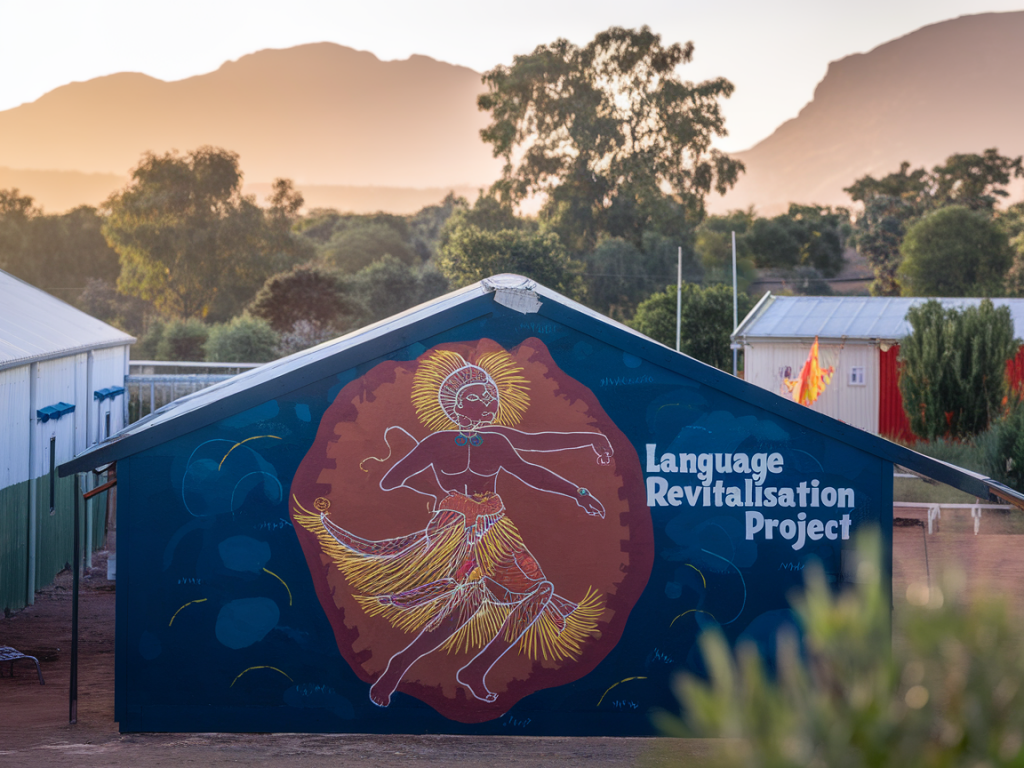
When I first encountered a community-led language class in the Highlands of Scotland, I thought I was attending a local revival project: elders teaching syllables to kids, a few hand-stitched primers on the table, the hum of tea and conversation. What surprised me was that the same room doubled as an art studio two nights a week, where those children and elders together printed posters, recorded oral histories, and experimented with sound pieces that folded the language back into daily life. That overlap — between linguistic survival and artistic experiment — is what I want to explore here. Language revitalisation is no longer a narrowly educational endeavour; in remote communities it is actively reshaping contemporary art practices, and in doing so, reconfiguring how culture, identity and creative economies interrelate.
Why are language projects attracting artists?
Artists are drawn to language revitalisation for several reasons. First, language is material: it carries sound, rhythm, dialectical inflection and embodied gestures that can be manipulated, sampled and staged. Second, language projects offer deep, place-based narratives that resist superficial cultural tourism. Finally, working with endangered languages often means working at the margins — a space where many contemporary artists already operate, looking to unsettle dominant narratives.
I’ve seen artists approach these projects as collaborators rather than documenters. Instead of extracting vocabulary lists or recording interviews like an archive, they embed themselves in community practices, co-designing workshops that produce new forms: posters with reclaimed typography, experimental films with native narration, or interactive installations that teach simple verbs through gameplay.
How do artists and communities collaborate without repeating colonial patterns?
This question sits at the heart of many conversations I’ve had. Ethical collaboration requires time, reciprocity and humility. The best projects I’ve observed start from community priorities — a desire to revive certain ceremonial songs, to produce bilingual signage, or to create school resources — and ask how artistic skills can support those goals.
- Shared authorship: Credits and intellectual property protocols are negotiated from the outset. Artists become co-authors, not owners.
- Skills exchange: Workshops are reciprocal. Linguists and elders teach language, while artists teach documentation, printing, or sound editing.
- Longevity over spectacle: Funding is structured to support multi-year relationships rather than one-off residencies.
I’ve seen examples where an artist’s presence catalysed a durable skillset: a community learning to use basic recording equipment (Zoom H4n, small field recorders), open-source software (Audacity, Ardour), or affordable print methods (Risograph, community colour laser printers) to produce zines and audio archives that belong to them.
What forms are emerging at the intersection of revitalisation and contemporary art?
The outcomes are often hybrid and inventive. Here are recurring formats that reveal how language work reshapes artistic practice:
- Sound art and oral archives: Artists turn oral histories into soundscapes — layering stories, environmental audio and language fragments into immersive pieces played in local community halls or international galleries.
- Textile and visual arts: Language motifs become patterns in textiles, tattoo designs, or public murals that translate grammar into visual systems.
- Performance and participatory theatre: Plays and performances enacted in revived languages create intergenerational rehearsal processes, where language learning is embedded in embodied practice.
- Digital interfaces and games: Simple apps and games teach vocabulary through play. Some projects use platforms like Unity or HTML5 to prototype low-bandwidth games accessible on older phones.
- Licenced and community-controlled publications: Zines, small press runs and bilingual children's books reframe storytelling practices and circulate beyond the community to build wider awareness.
Can technology help — or does it risk erasing nuance?
Technology is ambivalent. On one hand, recording devices, online dictionaries and social media provide powerful distribution and documentation tools. On the other, technology can flatten dialectal nuance or privilege literate forms over embodied oral knowledge.
In remote communities, practical considerations shape choices: low-bandwidth audio platforms (SoundCloud, Bandcamp), messaging apps (WhatsApp, Signal) for organising, and easy web publishing tools (WordPress, Booktype) to produce materials quickly. I’ve watched artists and community technologists choose tools not because they’re cutting-edge, but because they fit local needs: battery-powered recorders, solar-charged devices, and offline-capable apps.
One of the projects I followed used inexpensive Raspberry Pi microcomputers to create listening stations in a remote village hall. Elders uploaded songs, and children could trigger them using tactile buttons labelled in two languages. The technical setup was intentionally modest: open hardware, accessible schematics, and a focus on repairability so the project could be sustained locally.
What impact does this work have beyond culture?
Language revitalisation through art has ripple effects. It can bolster mental health by strengthening identity, create micro-economies through cultural tourism and craft sales, and influence policy when creative projects make language use visible in public spaces. In some cases, bilingual signage, theatre and festivals led by artists have prompted local councils to recognise minority languages in official documents.
Yet impact is uneven. Funding cycles, political resistance, and the lure of commodification pose risks. Artists and communities continually negotiate whether an artwork is a form of resistance, a fundraiser, or both. I’ve seen projects that avoid external grant cycles altogether by adopting micro-patronage models (Patreon, local share schemes) or by collaborating with small presses that respect community ownership.
What are the common obstacles and how are they overcome?
Obstacles include limited resources, intergenerational gaps, and external misrepresentation. Creative strategies to confront these include:
- Mentorship chains: pairing young artists with elders for long-term mentorships that build trust and linguistic fluency;
- Modular project design: making work that can be scaled up or down depending on funding, so community needs always come first;
- Community-led archiving: training locals in metadata, storage and digital preservation so materials stay under community control.
How can funders, museums and editors do better?
Funders need to move beyond short-term, output-driven grants. I’ve advocated for multi-year funding, unrestricted support, and payments that recognise community labour. Museums should approach these projects as partners: co-curate, share conservation skills, and return copies of any archival materials. Editors and journalists must avoid exoticising narratives — instead, centre the voices of community practitioners and disclose power dynamics in their reporting.
Practical measures I encourage include budgeting for language consultants, facilitating artist-elder residencies with clear agreements, and prioritising open access publishing that respects cultural protocols (embargoes on certain songs or stories, restricted access to ceremonial material).
Where I see the field heading
What excites me is the diversity of futures being imagined. In some places, language and art projects are seeding small creative economies — weaving, publishing, festival-making — that keep people connected to place. In others, artists are inventing forms that could only exist at this intersection: syntax-inspired visual scores, community-operated radio stations broadcasting bilingual poetry, and AR (augmented reality) walks that overlay language prompts onto landscapes.
The core change is conceptual: language revitalisation is less about recovering a static past and more about inventing new cultural ecologies. Artists who work patiently, ethically and in solidarity with communities can help language take on new lives — not as museum objects, but as living, evolving mediums for expression.