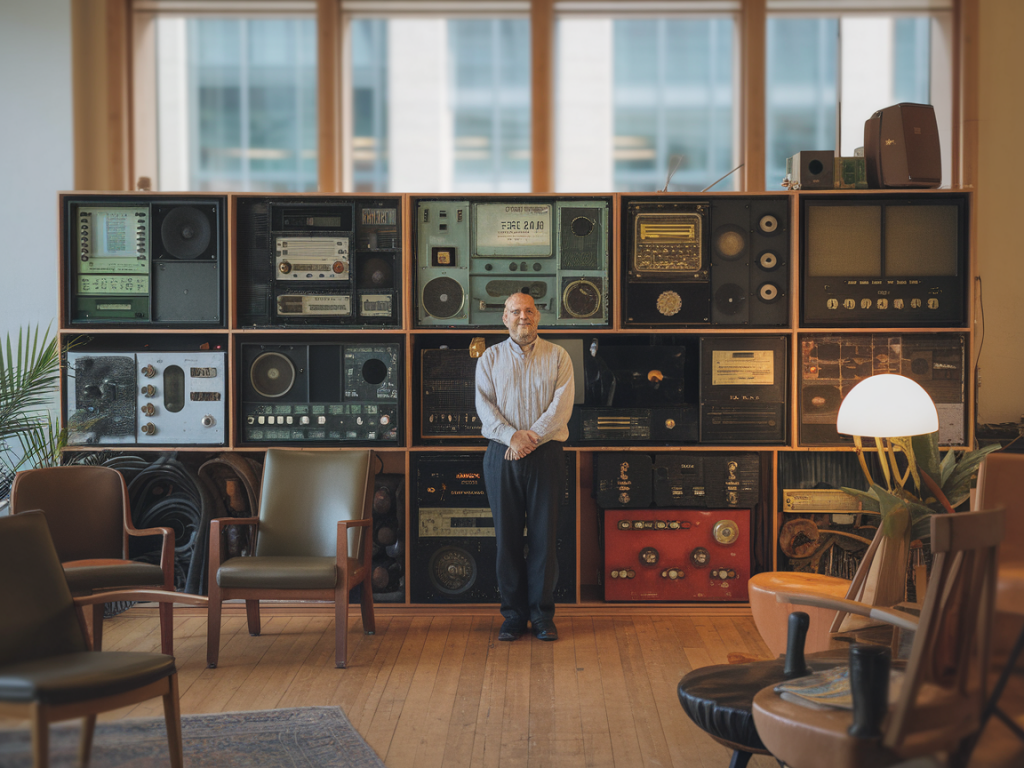
When I first set out to co-curate a city-wide biennial, I resisted the usual playbook: glossy press releases, international list of star artists, and a roster of white cube institutions. What felt more urgent to me was listening—really listening—to the people who were already shaping the city's cultural rhythms. That’s how a messy, brilliant idea landed: start with the local youth radio stations. Four years later, the biennial was being talked about not because it filled galleries, but because it had been spoken into being on the airwaves, in classrooms, in parks and on kitchen tables.
Why youth radio?
It may seem quirky—radio as the seed for a visual arts biennial—but youth radio stations are civic microphones. They amplify voices that mainstream media overlooks, they build technical and editorial skills, and they act as convenors across neighbourhoods. When I visited stations like Resonant FM, Pulse Youth Radio and several smaller hyperlocal projects, I encountered young producers with fierce opinions, experimental sound practices and deep ties to communities often missing from gallery conversations.
Starting with radio gave the curatorial process a pulse. Rather than imposing a theme from an armchair, we allowed local broadcasters to frame the questions. What do you want your city to look like? What histories do you want to recover? Who do you want to hear from? Their answers remade the biennial’s agenda.
How we began: a listening tour
My first move was pragmatic: coffee, not conferences. I spent three months doing a listening tour—small stations, arts collectives, after-school programmes and community centres. I arrived with no brief and a notebook. I took two rules with me: never promise anything you can’t deliver, and treat airtime as currency.
- I offered micro-grants for original radio commissions tied to the biennial’s curatorial questions.
- I promised studio access and mentorship rather than curatorial fiat.
- I made clear that the biennial would share resources—venues, technical crew, legal support—for community-led projects.
These small promises mattered because many stations operate on volunteer energy and precarious funding. By acknowledging and resourcing that labour, we began to build trust.
Co-creation, not extraction
One of the traps cultural organisations fall into is extractive collaboration: you take an idea from a community, you professionalise it, and then you present it in a sanitized form divorced from its origins. I wanted to avoid that. Instead, we developed a co-creative model that put young producers in positions of editorial control.
We ran a series of labs—mixing artists, sound engineers, oral historians and radio producers—that lasted six months. Each lab was an incubator where radio segments became site-specific pieces, performances and installations. For instance, a late-night youth programme about local migration histories transformed into a walking soundwalk around the port; a spoken-word show about housing insecurity turned into an audio archive installed in an abandoned council flat.
At every stage we asked: who owns the story? Who benefits? The answer was rarely the same, which meant building bespoke agreements that respected intellectual and cultural ownership while allowing the biennial to platform the work.
Technical and ethical infrastructure
Operationalising an airwaves-first biennial required some practical scaffolding. We needed producers who could translate ephemeral broadcasts into durable exhibition formats, and we needed ethical guidelines about consent and representation.
| Need | Solution |
|---|---|
| Recording and archiving | Mobile field kits and dedicated archivist to store master files with metadata |
| Legal clearance | Simple licensing templates and on-site legal clinics for contributors |
| Technical translation | Sound designers who could adapt radio content for installations and live performance |
| Ethics and consent | Co-created consent forms and workshops on attribution and cultural sensitivity |
These infrastructural investments were not thrilling to some funders, but they were crucial. Without them, we would have had great radio segments and no way to show them in physical spaces without compromising contributors.
Programming that blurred boundaries
One core decision I made was to refuse the neat separation between the broadcast and the exhibition. Instead, we treated the city as a single, sprawling venue: radio slots were events, and events were radio content. A youth DJ set in a community centre became a late-night transmission; an oral history workshop became a lunchtime series of live interviews in a market square. This cross-pollination invited new audiences into both radio and gallery contexts.
I also prioritized accessibility. For people who hadn’t visited a gallery in years (or ever), encountering a biennial through a familiar radio voice lowered the barrier to engagement. Conversely, gallery-goers were introduced to intimate, local narratives they might not have heard otherwise.
What worked — and what didn’t
Start with strengths: youth radio brought authenticity, agility and reach. We discovered stories that institutional curators might have missed—the clandestine football pitches under railway bridges, a grandmother-led poetry circle preserving a minority language, a group of teenagers rebuilding instruments from e-waste and broadcasting experimental scores.
But it wasn’t seamless. A few things we struggled with:
- Logistics: translating live radio into timed gallery works required careful scheduling and backup plans for studio failures.
- Expectation management: some broadcasters expected immediate career boosts; we had to be transparent about the long-term, collective gains.
- Funding cycles: short-term grants didn’t match the extended time communities needed to produce work with dignity.
When tensions arose, the remedy was straightforward: communicate, iterate, and pay people properly. Stipends ensured contributors could prioritise the project, and regular check-ins prevented misunderstandings from hardening into grievance.
Impact beyond the biennial
Perhaps the most surprising outcome was how radio-based interventions seeded lasting change. Stations received new listeners and volunteers; several youth producers won residencies and further commissions. Local councils began consulting the broadcasters on public programming. The audio archives we created became educational resources used in local schools, and the DIY media literacy workshops evolved into an ongoing training network.
For me, the most rewarding measure of success was intangible: I watched narratives shift. Neighbourhoods that had been marginalised in cultural planning were now visible in municipal strategies; young people who had been unheard were shaping how the city spoke about itself.
Practical advice for curators who want to try this
- Start by listening. Spend real time in spaces that already exist; don’t parachute in with a pre-packaged theme.
- Invest in infrastructure. Archive, legal, and technical support are not optional.
- Offer more than airtime. Mentorship, stipends and access to venues are equally valuable.
- Co-create ethical agreements. Cultural ownership is nuanced; negotiate collaboratively and transparently.
- Think cross-platform. Radio can be seed, not limitation—translate broadcasts into walks, installations, zines and performances.
This project taught me that inclusion is rarely a checkbox; it’s a practice of redistribution. By starting with youth radio, we redistributed visibility, resources and agency. The biennial that emerged was messier than a conventional format—but it was also more honest, more rooted and, in many ways, more alive.