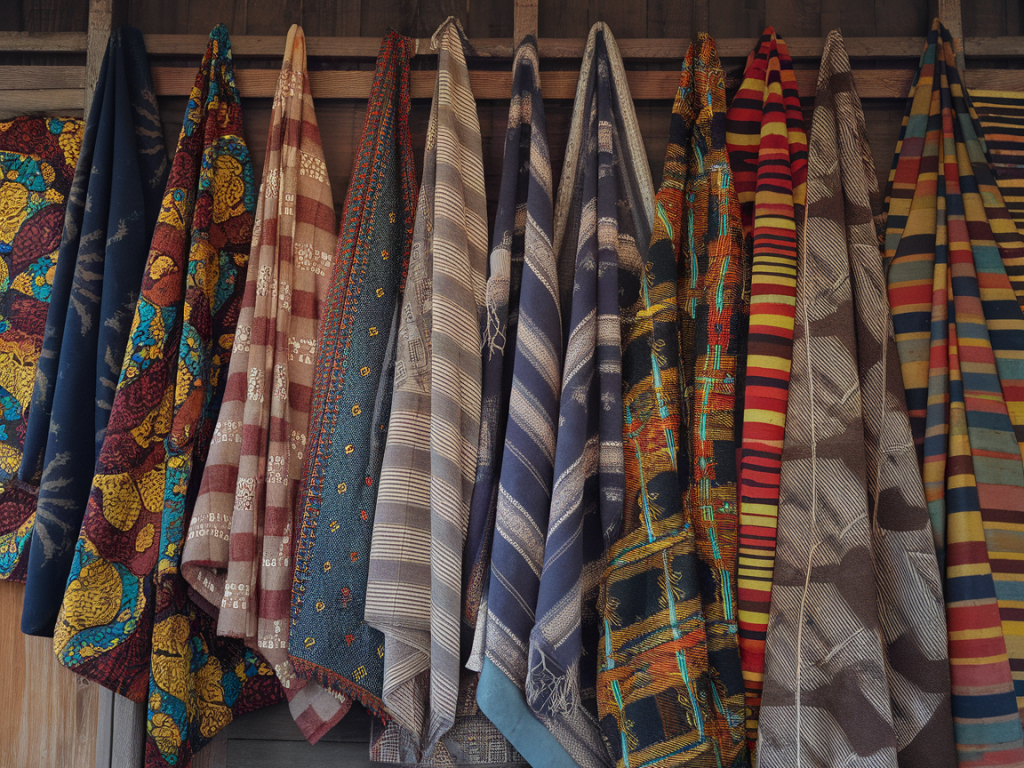
I inherited my first West African textile the way many people inherit objects: a box that had been in the attic, a faded wrapper folded around a family story. For years it was simply beautiful linen in my life — a Kente-like striping that belonged equally to memory and pattern. But when I started to research its maker, its journey and the reasons it ended up in our family house, everything shifted. Restitution stopped being an abstract policy conversation and became deeply personal, practical and urgent.
What do people mean when they talk about restitution?
Restitution is a slippery word because it covers a range of practices and expectations. At its most literal, it means returning an item to a rightful owner or place of origin. But for private, family-owned collections it can also mean a negotiated process that includes long-term loans, shared stewardship, financial compensation, or new partnerships between the family and communities or museums in West Africa where the textiles were made.
People often ask: is restitution only about returning objects to the state? The short answer: not necessarily. Many textiles were woven for local markets, colonial administrations, or diasporic networks; others were taken during conflict or extracted through unequal economic relationships. The provenance matters.
Who has a legitimate claim?
That question is never straightforward. Claims can come from:
In my experience, asking who “owns” a textile is as much an ethical inquiry as a legal one. A cloth used in initiation rites or funeral ceremonies has meanings that go beyond monetary value. A purely statutory approach often misses those living cultural claims.
Practical steps a family can take
If you find yourself holding textiles that might have a contested history, here are practical moves I’ve seen work:
Conservation and care — who pays and how?
One pragmatic barrier to restitution is the perceived capacity of a claimant to care for fragile textiles. Families worry about sending cloths to institutions lacking climate control or conservation expertise. Conversely, communities worry that family-held objects will be locked away.
Here are some options that balance care and access:
When is compensation appropriate?
Not every restitution negotiation ends with an object crossing borders. Compensation can look like:
I’ve seen meaningful models where families donate a textile to a museum and receive funding for local cultural initiatives in return — a form of restorative reciprocity rather than a simple exchange.
How do museums and institutions enter the conversation?
Museums are increasingly open to co-curation, loan agreements, and joint stewardship. From my work, the best approaches are humble and practical: they begin with listening, then move to transparent agreements that specify care, access, interpretation and long-term responsibilities.
Key clauses I recommend families insist on:
Examples and precedents
We often hear about high-profile restitutions like the Benin Bronzes, but smaller-scale textile returns or collaborative projects offer useful precedents. One that stuck with me involved a family in Manchester who worked with a Ghanaian community group to digitise a set of ceremonial cloths. The family retained ownership, but the community gained full access to high-quality digital replicas and a promise that any research or exhibition would be co-produced.
Another model is rotating custody: textiles travel between a family, a local museum in West Africa, and an international institution on multi-year cycles. This keeps the cloths alive in different contexts and shares the burden of care.
What about the market — can you sell contested textiles?
Technically yes, but ethically it’s fraught. Auction houses have tightened scrutiny on provenance; reputable dealers avoid objects with unclear histories. If a sale is pursued, full disclosure and consultation with potential claimants is essential. Selling to finance a community project or restitution can be legitimate — but secretive sales risk reputational damage and legal challenges.
Questions I get asked most often
| Concern | Possible response |
| Loss of family history | Co-curated displays, digital copies, oral history recording |
| Risk of damage | Conservation plans, training, shared custody |
| Financial cost | Grants, museum sponsorship, crowdfunding |
Holding a family collection of West African textiles asks you to balance respect for the objects’ origins with the realities of family memory. For me, the guiding principle is simple: treat each cloth as both material and story, and let the communities who made and used them have a seat at the table. Restitution is rarely an event; it is a relationship — one that, when done well, enriches both the family and the wider cultural landscape.