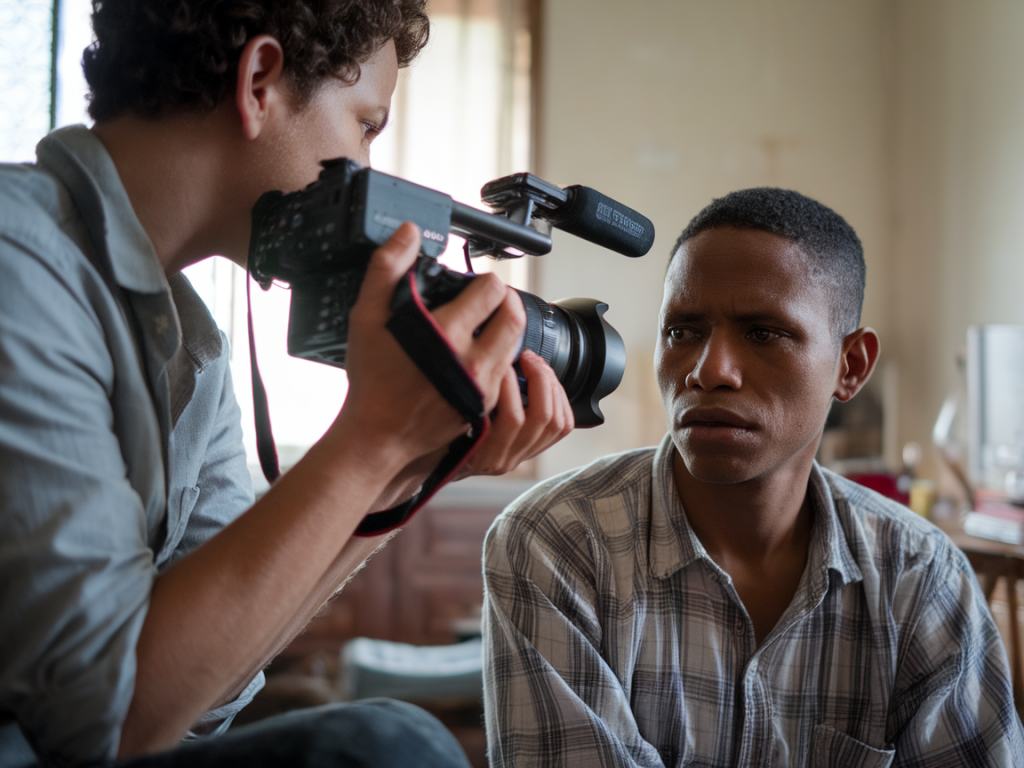
I remember the first time I watched an oral testimony translated into an immersive environment. The intimacy of standing beside someone as they recounted a journey across deserts and seas felt powerful, but it also made me acutely aware of responsibility. When you put a human voice, a face, a memory into VR, you’re not just creating an artwork—you’re mediating somebody’s lived experience into a new technological context. That mediation demands safeguards that are ethical, practical and sensitive to power imbalances.
Start with informed, ongoing consent
Consent in VR projects must be more than a signed form. I insist on an iterative, dialogic process: participants must understand not only what they’re telling me now but how those testimonies could be used, modified, archived and experienced in VR. That means explaining, in concrete terms, the final form (full 360 video, animated avatar, spatial audio piece), the distribution plans (festivals, online platforms, museums), and the possible longevity of the project.
Useful practices include:
Adopt a trauma-informed approach
Migrant testimonies often recount traumatic events. VR can intensify emotional impact because of its immersive nature. I therefore treat interviews as clinical spaces: I prepare participants, give them control over pacing, and avoid surprises. I work with trauma-informed interviewers or train teams in techniques that reduce retraumatization.
Practically, this involves:
Center co-creation and agency
I’ve learned that projects work best when those whose stories are used are co-authors. Co-creation can range from collaborative scripting and selection of soundscapes to inviting contributors to help shape the aesthetic treatment of their testimony. This moves the dynamic away from extractive documentation and toward shared authorship.
Respect anonymity and privacy
VR can re-present people in very life-like ways. There are times when verbatim testimony can reveal identity, location or migration routes that put people at risk. I weigh the aesthetic impulse for realism against potential harm. If anonymity is needed, technical and editorial methods can mask identity while preserving affect and narrative.
Secure data and protect digital assets
Oral testimonies are sensitive data. I treat them with the same security protocols I would with archival records or personal health information. That means encrypted storage, controlled access, and secure transfer methods.
Be transparent about monetisation and compensation
Often, funders, distributors or festivals will monetise VR projects. I emphasise clarity about whether contributors will be compensated up-front, receive revenue share, or be offered stipends for participation. Payment is not just ethical—it recognises the labour of telling and preserving stories.
Navigating legal frameworks and residency rights
Legal contexts matter. Contributors might be asylum seekers, undocumented migrants, or people with precarious status. Legal advice should inform decisions about anonymity, storage and distribution. I consult institutional legal counsel or NGOs specialising in migrants’ rights to understand risks and obligations.
Consider cultural sensitivity and translation ethics
Translation is an interpretive act. I try to preserve linguistic nuance by working with translators who are not just linguistically capable but culturally attuned. Whenever possible, I include the original language track and offer multiple translation modes—literal, contextual, or adapted—for different audiences.
Design for accessibility and multiple modes of engagement
Immersion should not exclude. VR experiences must be accompanied by accessible alternatives—2D video, audio-only tracks, transcripts, and tactile or text-based presentations. I’m careful to design multi-modal outputs so the stories reach diverse audiences without forcing everyone into the same sensory encounter.
Archive responsibly and plan for long-term stewardship
Once created, these testimonies can outlive both creator and audience. I develop archiving plans with contributors and reputable institutions—community archives, university special collections, or rights-respecting digital repositories. Archival access rules should reflect contributors’ wishes about who may consult raw materials and under what conditions.
Test and evaluate audience impact
Finally, I build evaluation into projects. How do viewers respond? Does the immersive presentation change empathy, policy conversations or community dynamics? I test with small, diverse groups—including contributors where appropriate—and measure both cognitive and emotional impacts. This surveillance helps refine ethical practice for future projects.
Turning migrants’ oral testimonies into VR is a powerful act. If handled with humility, care and robust safeguards, it can amplify voices and catalyse understanding. Handled carelessly, it risks exploitation, retraumatisation and harm. My guiding principle is simple: centre the dignity, agency and wellbeing of the people whose lives you are interpreting—then let technology serve that ethical core.