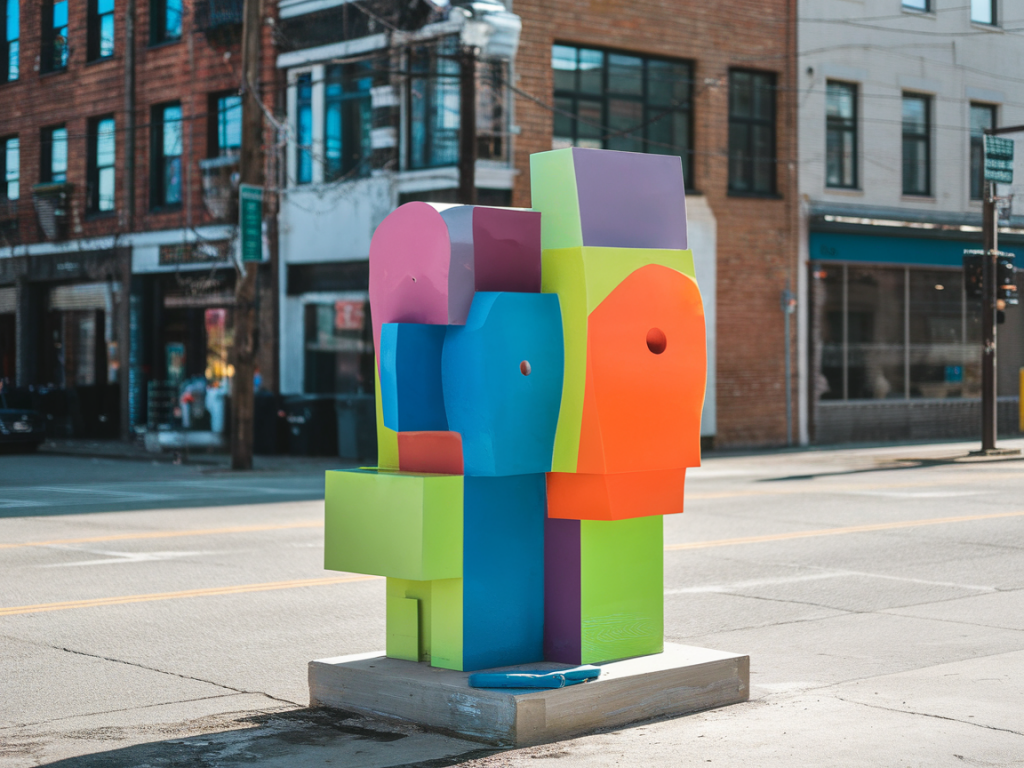
I’ve spent years working between museums, independent presses and community projects, and one question keeps coming up whenever public art meets shifting neighbourhoods: what should you actually ask before commissioning a piece where people’s homes, histories and livelihoods are being redesigned around them? Gentrification isn’t just an economic process — it’s a cultural and social one. Commissioning public artwork in that context requires more than an aesthetic brief; it calls for ethical clarity, community care and practical foresight.
Start with the community
If there’s one principle I return to, it’s this: ask the people who live and work in the neighbourhood first. That sounds obvious, but too often consultation is reduced to a perfunctory meeting or a glossy survey. I ask: who are we listening to, how are we listening, and who gets to shape the conversation?
- Who represents the community? Don’t rely only on neighborhood associations or developer-appointed groups. Speak with tenants, market traders, faith groups, long-term residents and youth organisations.
- What does meaningful consultation look like here? Is language access needed? Are meetings accessible outside working hours? Can we provide childcare or small stipends so participation isn’t a cost to low-income residents?
- How will feedback be used? Commit to transparent reporting: publish what you heard and how it influenced decisions.
Define the social objectives
Commissioning art in a gentrifying area without clear social objectives is like planting a tree without considering the soil. I always ask: what change are we aiming for — and who benefits?
- Is the artwork intended to support existing residents or to attract new ones? The intention will determine siting, messaging and programming.
- Are there measurable outcomes? If inclusion, local employment or education are goals, build them into the brief and the budget.
- How will art interact with displacement pressures? Consider pairing the commission with tenant support, legal clinics or affordable housing commitments; art should not be the thin gloss over a deeper social problem.
Choose artists with care — and compensate them fairly
Artists aren’t neutral decorators. Their practice, identity and relationship to place matter. I ask: who is being invited, why, and on what terms?
- Will local artists be prioritised? Local creators often hold cultural memory the commissioning team lacks — prioritise them, but don’t box them into token roles.
- What are the selection criteria? Make criteria public and include community representatives on selection panels.
- Are fees realistic? Use professional fee guidelines (for example, Arts Council or freelance rates in your country) and budget for research, community engagement, fabrication, travel, tax and contingency.
Think beyond the object — programming and stewardship
A mural or sculpture is also a node in a larger social life. Ask how it will be activated, looked after and embedded in local narratives.
- What programming will accompany the work? Workshops, oral history sessions, school partnerships and openings can deepen local ownership.
- Who will maintain the work? Have a maintenance plan and budget — graffiti, weathering and vandalism are realities. Identify an accountable steward (local council, cultural organisation or community trust).
- What happens if the use of the site changes? Include clauses on relocation, deinstallation and compensation in your contracts.
Address legal, planning and ownership questions
Public art lives inside a web of permits, liabilities and property rights. Ask the practical questions early to avoid stalled projects and community frustration.
- Who owns the artwork? Clarify whether the artist retains copyright, who holds the physical ownership and how images of the work can be used.
- What permissions are required? Check planning permission, highways consents and building regulations. Engage early with local authorities.
- Who is liable? Define responsibility for accidents, damage and insurance. Public liability insurance is non-negotiable.
Materials, sustainability and durability
In transient neighbourhoods, durability is both practical and political. Ask how material choices reflect environmental responsibility and social longevity.
- What materials will be used? Prioritise low-maintenance, repairable materials and consider local supply chains to support regional craftspeople.
- Is the lifecycle sustainable? Assess embodied carbon, recyclability and end-of-life plans.
- Can the work be repaired locally? Invest in skills transfer so local technicians or artists can help with conservation.
Consider symbolism, narratives and contested histories
Public art often becomes a site for competing memory. I always ask: whose history is being told, and whose is being left out?
- Does the work acknowledge pre-existing histories? In areas with colonial, industrial or migration legacies, avoid surface-level nostalgia and engage historians, oral carers and community elders.
- Will the piece be provocative? Provocation can be valuable, but it should be intentional — and accompanied by spaces for dialogue and disagreement.
- How will contested meanings be managed? Create programming and interpretation that invite multiple voices rather than offering a single authoritative reading.
Finance transparently and sustainably
Funding sources shape both perception and power. I recommend asking where money is coming from and what strings are attached.
- Who is funding the project? Corporate sponsorship, developer contributions and public grants imply different obligations. Be transparent about sponsors to maintain trust.
- Is there a long-term budget? Include maintenance, insurance and program funding for at least 5–10 years.
- Can funds be allocated to anti-displacement measures? If developers are contributing, negotiate social benefits — legal advice clinics, affordable units or community funds — alongside the art budget.
Measure impact — and be honest about limits
Art doesn’t automatically heal social fractures. I ask: how will we know if this intervention helps, and what will we do if it doesn’t?
- What metrics will you use? Track participation, local sentiment (surveys, interviews), footfall changes and any unintended consequences.
- Who evaluates? Include independent evaluators and community members in assessment, and publish findings openly.
- How will feedback be acted on? Set mechanisms for iterative changes to programming, conservation or interpretive material.
Plan for contingency and exit
Neighbourhood dynamics change. I always press commissioners to plan for any eventuality.
- What’s the decommissioning plan? If the artwork needs to be removed, who pays and where does it go?
- What if the artist leaves or funding dries up? Include clauses for succession planning, conservation responsibilities and redistribution of funds.
- How will you record the process? Document the project — decisions, consultations and controversies — so it contributes to a public archive rather than disappearing with the next development cycle.
Commissioning a public artwork in a gentrifying neighbourhood is a political and creative act. It can center local voices, make visible hidden histories and create shared spaces — or it can become a veneer that accelerates displacement. By asking these questions early and openly, you reduce the risk of harm and increase the chance that the work will matter to the people who live with it. If you’re at the start of that process, treat the brief as a living document: keep listening, document every decision, and build the resources needed to sustain the work beyond its unveiling.