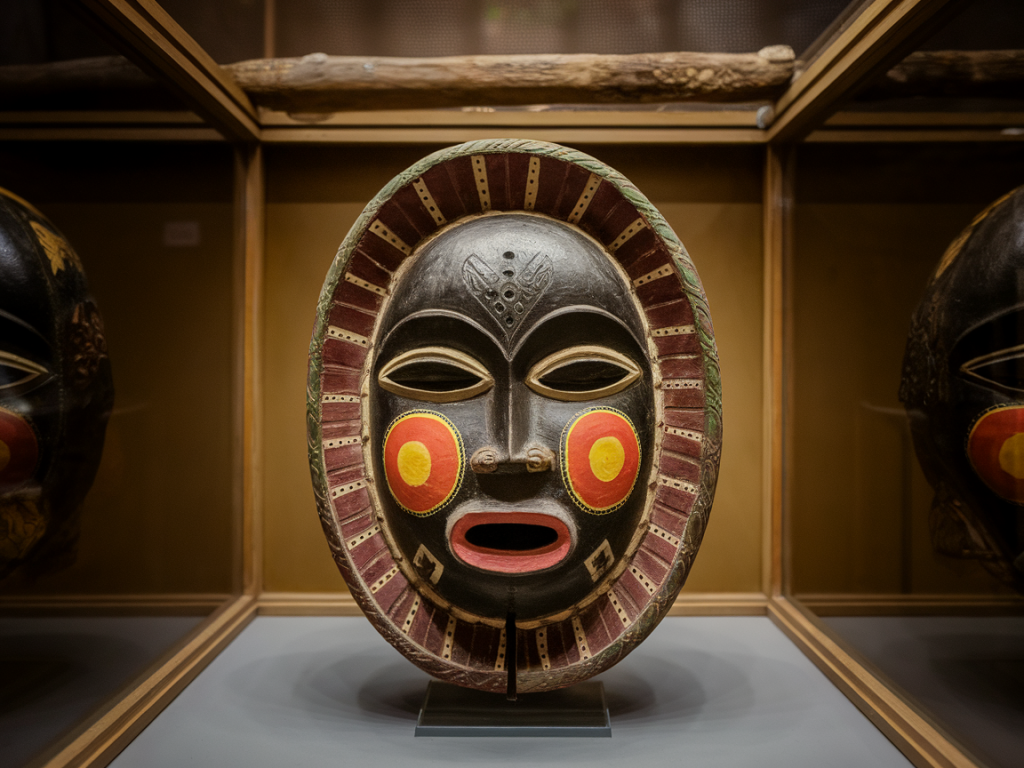
When a ritual mask returns to its originating village, it can feel like a heartbeat found again — an object that carries memory, authority and the potential to reconnect a community with practices interrupted by displacement, colonial collecting, or market pressure. But I’ve learned that the mere presence of a mask is not a panacea. The way repatriation is handled determines whether it becomes a catalyst for cultural and economic revival or a kind of cultural tourism that strips ceremony of meaning and livelihoods of dignity.
Framing the question: revival versus commodification
People often ask me: can returning an object actually help a village prosper, without turning ceremonies into souvenirs? From work with museums and communities across Europe and West Africa, I’ve seen it happen both ways. A returned mask can restore ritual authority, rekindle intergenerational knowledge transmission, and become the centre of locally defined cultural projects. Or it can be displayed as a static icon for visitors, while practitioners are excluded from decision-making and the practice is reshaped to meet outside expectations.
In my view the difference lies in two linked commitments: community agency and ethical livelihoods. Whoever controls meaning and economic benefit will shape outcomes. Repatriation should therefore be a starting point for an inclusive process — one that foregrounds the community’s priorities rather than the collectors', curators' or funders'.
Principles that steer revival without commodifying practice
- Community-led stewardship: The community must decide where the mask lives, who cares for it, and how it is used. Stewardship can be collective — involving elders, ritual specialists, youth and local authorities.
- Protocols over display: Cultural protocols should guide access. That might mean restricted viewings, ceremonies only for initiates, or seasonal public presentation agreed by elders.
- Benefit-sharing: Economic gains from any use of the mask should be distributed according to community norms. Transparency and local governance structures are essential.
- Skills transmission: Use repatriation to fund apprenticeships, documentation and local teaching, so that revival is about living practice not museumification.
- Contextual tourism: If visitors are part of a sustainable plan, their experience should be curated by locals, educational, respectful, and routed to community projects rather than external businesses alone.
Practical pathways I’ve seen work
Here are some practical avenues that have allowed a returned mask to catalyse revival, while minimising commodification. I write these from projects I’ve observed or directly supported, where possible — and from conversations with curators, anthropologists and practitioners.
- Establishing a community cultural trust: A trust can manage the mask and related assets, create revenue streams (workshops, cultural events, publications) and decide how profits are reinvested. Crucially, governance must be representative. In one West African village I worked with, the trust included elders, women’s groups and youth representatives; profits funded apprenticeships in carving and storytelling.
- Apprenticeship and living heritage programmes: Using repatriation funds to support master-apprentice relationships avoids turning ceremony into a performance. Payment to practitioners for training time recognizes cultural labour and helps prevent practices being monetised only as shows for tourists.
- Contextual museums managed locally: Instead of a cold glass case erected by outsiders, some communities have developed small interpretation centres adjacent to the ritual space. They provide layered narratives — archival photos, oral histories, videos in local languages — and are staffed and curated by community members. Visitors learn, and the community controls interpretation.
- Rights-based legal agreements: Repatriation can be accompanied by contracts that specify access, use, and revenue sharing. These agreements should be flexible and culturally informed, not rigid legalese that ignores customary law.
- Cultural education and school curricula: Integrating the mask’s stories into local schools and adult education supports cultural continuity. Children learn the mask’s significance through elders and multimedia resources co-created with the community.
How tourism can be part of the solution — when it’s properly designed
Tourism is often framed as the obvious economic lever. I’m wary of quick fixes, but properly designed tourism can support revival:
- Offer small-group, pre-booked visits led by community guides, with strict rules about photography and behaviour.
- Package experiences around skill-sharing (e.g. carving workshops, story sessions) where proceeds pay practitioners a fair wage rather than a token fee.
- Limit frequency to preserve ritual seasonality and ensure ceremonies are not rescheduled to accommodate visitors.
- Use digital platforms — responsible storytelling via a community-managed website or social channels — to attract cultural tourists who value depth over spectacle.
Guarding against common pitfalls
There are patterns that tend to produce commodification. Here’s what I watch for and advise communities and institutions to avoid:
- External gatekeepers: When museums or NGOs retain control over interpretation and revenue, communities become underpaid stewards of their own heritage.
- Performance pressure: When the economic incentive is to put on shows for tourists, ritual timing and meaning are eroded. Sacred acts become staged entertainment.
- Unequal benefit distribution: If profits accrue to a few — often men or external operators — social tensions can rise and cultural workers be marginalised.
- Overexposure: Constant display or viral social media can strip secrecy and weaken the sanctity that gives the mask its power.
Tools and models that support ethical revival
Some tools and institutional models help navigate complexity:
- Memorandums of Understanding (MoUs) co-drafted with communities: These outline mutually agreed terms for care, access and benefit-sharing, and can be revisited periodically.
- Community curatorship training: Programs run by museum partners that teach exhibition design, documentation and conservation to locals, ensuring skill transfer.
- Participatory documentation: Combining oral history, film and archival research led by community members preserves context while giving control over narratives.
- Micro-enterprises owned by practitioners: From cooperative craft workshops to locally run guesthouses, small businesses can channel tourism income ethically when owned and managed locally.
Questions I always ask before supporting a repatriation project
When I advise institutions or communities, I test plans against a set of practical questions. They’re simple, but they reveal whether revival will be respectful or extractive:
- Who decides when and how the mask is used?
- How will economic benefits be distributed and governed?
- Are there measures to protect ritual secrecy and integrity?
- What training and employment will be created for cultural practitioners?
- How will the project be monitored and adapted over time?
Answering these questions honestly often leads to a hybrid model: the mask returns to a ceremonial setting, a small interpretation centre explains its history to visitors, apprentices learn from elders, and a community trust manages revenues. That combination preserves meaning while creating livelihoods — not by selling the ritual, but by supporting the people who keep it alive.
Repatriation is not an endpoint. It’s a responsibility and an opportunity. If handled with humility, good governance and an insistence on local agency, a returned ritual mask can do more than restore an artefact: it can rekindle social practices, create dignified economic pathways, and reassert the community’s place in shaping its own future.