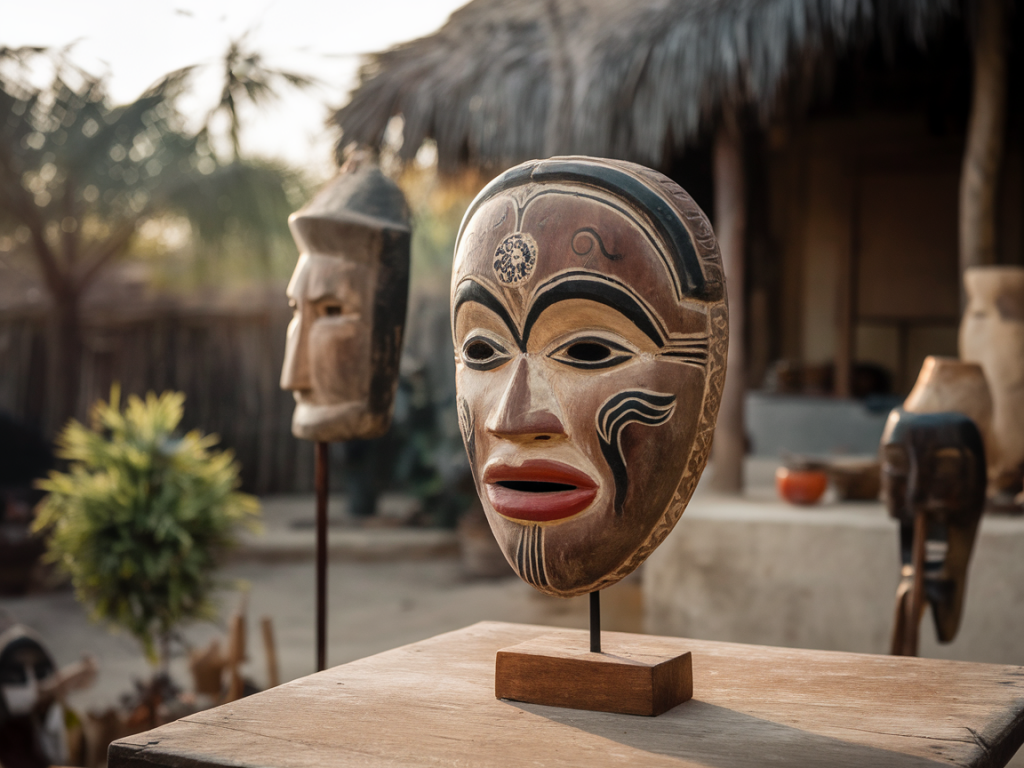
When a single carved mask returns to a village after decades — sometimes centuries — away, the ripple effects are rarely limited to the object itself. I've watched this happen in places where I’ve researched collections and oral histories: a mask comes home and, slowly but unmistakably, a whole constellation of practices, identities and conversations reawakens. This is not just about restitution as legal transfer; it’s about how an object can anchor memory, restore authority, and catalyse communal projects that were waiting, invisibly, for permission to continue.
Why does one mask matter so much?
People often ask me: “Isn’t repatriation symbolic? What will a single object actually change?” The short answer is that objects carry relational power. In many communities a ritual mask is not an artwork to be admired in isolation; it is a living node in a network of meanings — genealogies, songs, rituals, taboos and ecological knowledge. When a mask is absent, those relationships are frayed. Returning it can re-establish lineage claims, allow elders to teach masked ceremonies, and give younger generations a tangible anchor for stories that are otherwise only oral.
I remember speaking with an elder in a West African village who described a mask that had been taken during the colonial era. He spoke of the mask as an active interlocutor in community life — a mediator in land disputes, a presence at harvest festivals, a carrier of moral teaching. Without it, new forms of conflict resolution and seasonal rites had atrophied. When that mask was returned — not to a glass case but to the responsibility of the community — elders regained their ritual role and, crucially, were able to instruct apprentices again. The mask became a practical tool for cultural transmission rather than a lost artifact recalled only in nostalgia.
How does repatriation change power dynamics?
Repatriation reconfigures authority. Museums, collectors and universities have long shaped narratives about objects through labels, academic catalogues and exhibition choices. Bringing a mask back doesn’t simply relocate material culture; it shifts who gets to speak about its meaning. The community that holds the mask regains veto power over use, display and interpretation.
That power has visible effects. In one project I followed in Southeast Asia, the return of a single ancestral mask led to the establishment of a local cultural council. The council negotiated how neighbouring villages shared ritual responsibilities, set up rules for transmission, and decided on seasonal performances. These were practical governance mechanisms tied directly to cultural practice — things that material restitution alone in a museum lobby could never achieve.
What practical changes follow a repatriation?
- Revival of apprenticeships: Mask carvers, singers and ritual specialists often resumed teaching when they had an object to work with. Learning is embodied; you cannot properly teach the gestures, the way a mask sits on a face, or the acoustics of masked song, through photographs alone.
- Economic opportunities: Cultural revival can lead to sustainable livelihoods — from festival tourism managed by communities to workshops and ethical craft markets. I’ve seen villages develop small visitor centres, host residency programmes for artists, and sell documentation produced by their own archivists rather than outside intermediaries.
- Heritage mapping: A returned mask often prompts documentation projects: recording histories, mapping sacred sites, and digitising oral narratives. These archives become resources for schools and community planning.
- Intergenerational dialogue: The return can be a catalyst for conversations between elders and youth about identity, migration and modernity. It creates a space to reassess which traditions to keep, adapt or set aside.
Are there risks or unintended consequences?
Yes. Repatriation is not an automatic fix. I’ve observed cases where returning a mask reignited local disputes over ownership or succession. When the custodial rules had been unsettled by displacement or demographic change, the community had to negotiate fresh governance structures — and conflicts sometimes emerged.
There is also the risk of commodification. When heritage becomes attractive to outsiders, there can be pressure to stage rituals for tourists, or to convert sacred objects into marketable artefacts. That’s why the terms of return matter. In successful cases, agreements stipulate community control over how the mask is used and who benefits financially from any cultural activities it inspires.
How should museums and communities collaborate?
From what I’ve seen, the most fruitful returns are those accompanied by long-term support rather than a one-off handover. Museums can help in ways that respect community autonomy:
- Support capacity building — funding for local archivists, conservators and cultural managers rather than imposing external staff.
- Share technical knowledge — training in conservation that adapts to local practices and materials, so masks can be cared for without removing ritual uses.
- Facilitate dialogues — bringing different stakeholders together to draft custody agreements that are culturally appropriate and legally sound.
- Help with documentation — but ensure that archives are co-owned and accessible to the community first.
Can a returned mask inspire wider social change?
In one island community, the return of an ancestral mask became a pivot for environmental stewardship. The mask was tied to a ritual that marked the timing of fishing seasons and taboo zones. Reinstating that ritual helped regenerate local marine management practices, reducing overfishing in adjacent reefs. The mask, in other words, was also an ecological tool — a cultural mechanism that mediated human relationships with the landscape.
Elsewhere, the cultural momentum from a repatriation has helped communities lobby for land rights, funding for cultural centres, and recognition of minority languages. These outcomes are not guaranteed and depend on local leadership and external support, but the mask can be the spark that makes such claims legible and morally persuasive to policymakers and funders.
What questions should communities ask before accepting a return?
- Who will be the custodian, and what are the rules for access and use?
- How will conservation be handled without sterilising the object’s ritual life?
- What benefits will the community derive, and how will they be distributed?
- Is there a plan for documentation and education that safeguards sensitive knowledge?
- How might tourism or external interest be managed to avoid exploitation?
There is no single template. Each community brings different histories and priorities. My take, informed by years of fieldwork and conversations with curators and elders, is that repatriation matters most when it is treated as the start of a relationship rather than the end of an administrative process. A mask returned without context can become a trophy that collects dust; a mask returned with shared stewardship, training and respect can become a fulcrum for renewal.
When managed with care, the homecoming of one ritual mask can rewire cultural life: restoring authority, rekindling practices, and opening pathways for social, economic and ecological resilience. In the slow work of cultural revival, material things often re-enter circulation as catalysts — small, beautiful, complicated instruments of collective remembering and imagining.